Ethereum Killers 2026: Top 5 Altcoins for US Growth
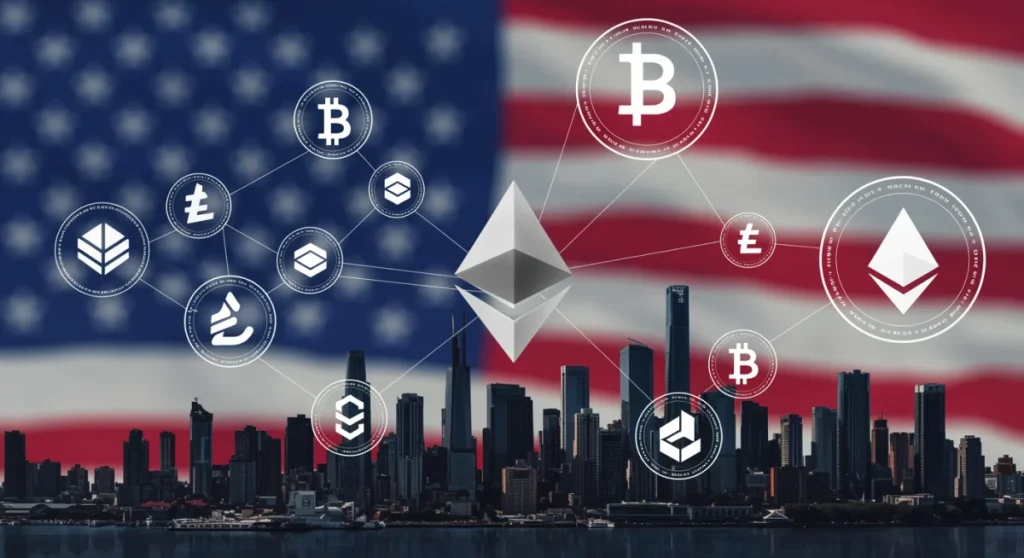
‘Ethereum Killers in 2026: A Comparative Analysis of Five Altcoins Poised for Significant Growth in the US’ examines the technological advancements and market potential of Solana, Cardano, Polkadot, Avalanche, and Near Protocol as they challenge Ethereum’s dominance.
The cryptocurrency landscape is in constant flux, with innovations continuously pushing the boundaries of what’s possible. As we look towards 2026, the discussion around Ethereum Killers in 2026: A Comparative Analysis of Five Altcoins Poised for Significant Growth in the US intensifies. These platforms aim to address perceived limitations of Ethereum, offering faster transactions, lower fees, or enhanced scalability, and are attracting significant attention from investors and developers alike in the United States.
Understanding the ‘Ethereum Killer’ Narrative in the US Market
The term ‘Ethereum Killer’ might sound aggressive, but it fundamentally refers to blockchain platforms striving to surpass Ethereum’s capabilities in areas like scalability, transaction speed, and cost-efficiency. In the dynamic US market, where innovation and adoption are rapid, these platforms are not necessarily aiming to eliminate Ethereum but rather to offer compelling alternatives and specialized solutions that can coexist and even complement the broader decentralized ecosystem. The narrative is driven by the demand for more efficient and robust blockchain infrastructure to support the burgeoning decentralized finance (DeFi), non-fungible token (NFT), and Web3 applications.
Ethereum, despite its pioneering status, faces challenges such as network congestion and high gas fees, especially during periods of high demand. These issues have opened the door for rival blockchains to present themselves as superior alternatives. For US investors and developers, the choice of blockchain platform is critical, influencing project viability, user experience, and long-term growth potential. The competition fosters innovation, leading to more advanced and user-friendly blockchain technologies.
The Genesis of Scalability Concerns
Ethereum’s early success led to widespread adoption, which, in turn, exposed its limitations. The proof-of-work consensus mechanism, while secure, struggled with throughput, resulting in slow transaction finality and exorbitant fees. This created a fertile ground for new projects to emerge, promising solutions to these pressing problems.
- High Gas Fees: Unpredictable and often prohibitive costs for transactions.
- Slow Transaction Speed: Limited transactions per second (TPS) compared to centralized systems.
- Scalability Issues: Difficulty in handling increasing network demand without performance degradation.
- Environmental Concerns: High energy consumption associated with proof-of-work.
The quest for a more scalable and efficient blockchain has intensified, with many projects vying for a piece of the decentralized pie. These ‘Ethereum Killers’ often leverage different consensus mechanisms or architectural designs to achieve higher performance, lower costs, and greater decentralization. Their success in the US market will depend on their ability to deliver on these promises and attract a robust ecosystem of developers and users.
In conclusion, the ‘Ethereum Killer’ narrative is not about destruction but about evolution and competition. As the blockchain industry matures, the need for diverse and specialized platforms becomes evident. The US market, with its strong appetite for technological advancement, is a critical battleground for these emerging altcoins as they seek to carve out their niche and demonstrate their long-term potential.
Solana: The Speed Demon of Decentralization
Solana has rapidly ascended as a formidable contender in the blockchain space, largely due to its remarkable transaction speed and low costs. Its unique architecture, incorporating mechanisms like Proof-of-History (PoH) alongside Proof-of-Stake (PoS), allows it to process tens of thousands of transactions per second, a significant leap from Ethereum’s current capabilities. This high throughput has made Solana a preferred choice for high-frequency trading applications, gaming, and other demanding decentralized applications (dApps) within the US.
The platform’s ecosystem has seen explosive growth, attracting a diverse range of projects from DeFi protocols to NFT marketplaces. US developers are increasingly drawn to Solana for its robust infrastructure and developer-friendly environment, which includes support for Rust, a modern programming language known for its performance and safety. The Solana Foundation actively promotes innovation through grants and hackathons, further solidifying its position as a leading blockchain for future growth.
Key Technological Innovations
Solana’s core innovations are designed to overcome the scalability trilemma – balancing decentralization, security, and scalability. PoH, in particular, creates a historical record of events, allowing for efficient ordering of transactions and reducing the overhead typically associated with distributed consensus.
- Proof of History (PoH): A cryptographic clock that provides a verifiable order of events.
- Tower BFT: A PoH-optimized version of Practical Byzantine Fault Tolerance.
- Gulf Stream: A mempool-less transaction forwarding protocol.
- Sealevel: Parallel smart contracts runtime for efficient execution.
These innovations collectively enable Solana to achieve unparalleled speeds and lower transaction fees, making it highly competitive. The US market’s focus on efficiency and user experience positions Solana as a strong candidate for widespread adoption as businesses and consumers seek faster and cheaper alternatives to traditional blockchain solutions.
In summary, Solana’s commitment to speed and efficiency, coupled with its growing ecosystem and developer support, positions it as a significant player in the ‘Ethereum Killer’ narrative. Its technological prowess and strategic focus on high-performance applications make it a compelling investment for those looking at the future of decentralized technology in the US.
Cardano: A Peer-Reviewed, Research-Driven Blockchain
Cardano stands out in the blockchain arena for its academic rigor and methodical, peer-reviewed development approach. Unlike many other projects that prioritize speed to market, Cardano emphasizes security, sustainability, and scalability through extensive research and formal verification. This deliberate strategy has garnered a strong following, particularly among those in the US who value stability and long-term viability in their blockchain investments. Its Ouroboros proof-of-stake consensus mechanism is hailed as an energy-efficient and highly secure alternative to traditional proof-of-work systems.
The platform’s roadmap is divided into distinct eras, each focusing on specific functionalities, from foundational infrastructure to smart contracts and decentralized governance. This phased approach, while sometimes slower in delivering new features, ensures a robust and well-tested system. Cardano aims to provide a secure and stable platform for global financial applications, identity management, and supply chain solutions, areas with significant potential for growth and adoption in the US.
Architectural Layers and Governance
Cardano’s architecture is unique, separating its ledger from its computation layer, which allows for greater flexibility and easier upgrades. This design philosophy underpins its commitment to scalability and future-proofing, enabling continuous improvements without disrupting the core functionalities.
- Cardano Settlement Layer (CSL): Handles ADA transactions and ledger security.
- Cardano Computation Layer (CCL): Supports smart contracts and dApp execution.
- Project Catalyst: A decentralized treasury and innovation fund for community-driven development.
- Voltaire Era: Focuses on decentralized governance, allowing ADA holders to influence the network’s future.
The focus on scientific research and formal methods ensures that Cardano’s solutions are not only innovative but also rigorously tested and validated. This approach resonates with institutions and enterprises in the US seeking reliable and secure blockchain solutions for critical applications. Cardano’s long-term vision and commitment to principled development make it a strong contender for sustained growth.
Ultimately, Cardano’s strength lies in its meticulous, research-driven development and its focus on long-term sustainability. While its pace may be slower than some competitors, its commitment to security and robust engineering positions it well for significant adoption and growth in the US market by 2026, especially for applications requiring high assurance and reliability.
Polkadot: The Interoperability Innovator
Polkadot is a groundbreaking blockchain platform designed to enable different blockchains to communicate and transfer value and data seamlessly. Its vision of a multi-chain future addresses the fragmentation currently prevalent in the blockchain ecosystem, where individual chains operate in isolation. This focus on interoperability is particularly appealing in the US, where businesses and developers are increasingly seeking ways to integrate various blockchain solutions into their existing systems. Polkadot’s architecture, featuring a central Relay Chain and customizable Parachains, allows for specialized blockchains to coexist and interact securely.
The ability to create application-specific blockchains (Parachains) that are connected to a shared security model is a powerful offering. This not only enhances scalability but also provides unparalleled flexibility for developers to build tailored solutions. Polkadot’s Substrate framework makes it easier to build these custom blockchains, fostering a vibrant ecosystem of innovation. The US market’s demand for integrated and flexible blockchain solutions positions Polkadot for significant expansion.
Understanding the Polkadot Architecture
Polkadot’s revolutionary design revolves around its Relay Chain, which provides shared security and facilitates communication between heterogeneous Parachains. This model allows for specialized functionalities without compromising overall network security.
- Relay Chain: The central chain responsible for network security and consensus.
- Parachains: Independent, application-specific blockchains connected to the Relay Chain.
- Parathreads: Pay-as-you-go Parachains for projects with less continuous connectivity needs.
- Bridges: Enable Polkadot to connect with external networks like Ethereum.
The interoperability offered by Polkadot is crucial for the future of Web3, allowing for a more connected and efficient decentralized internet. For US enterprises and projects looking to leverage multiple blockchain functionalities or integrate with existing systems, Polkadot provides a robust and scalable solution. Its unique approach to solving the interoperability challenge makes it a compelling ‘Ethereum Killer’ with significant growth potential.
In conclusion, Polkadot’s innovative approach to interoperability and its flexible, scalable architecture make it a key player in the next generation of blockchain technology. Its ability to unify disparate blockchains under a shared security model positions it as a powerful platform for diverse applications, ensuring its continued relevance and growth in the US market by 2026.
Avalanche: High Performance and Customizable Subnets
Avalanche has quickly gained traction as a high-performance blockchain platform known for its rapid transaction finality and impressive scalability. Its unique architecture, built on three interconnected blockchains – the X-Chain, C-Chain, and P-Chain – allows for specialized functionalities and high throughput. This design enables Avalanche to support a wide range of decentralized applications, from DeFi protocols to enterprise-grade solutions, making it highly attractive to the US market seeking efficient and versatile blockchain infrastructure.
A standout feature of Avalanche is its support for customizable Subnets, which are essentially independent blockchains that can define their own rules, consensus mechanisms, and even tokenomics. This flexibility allows developers to launch highly tailored blockchain networks for specific use cases, benefiting from Avalanche’s underlying security and interoperability. The ability to create permissioned or permissionless Subnets makes Avalanche an ideal choice for both public and private blockchain deployments, catering to diverse needs within the US financial and technological sectors.
The Tri-Chain Architecture and Subnets
Avalanche’s innovative tri-chain structure optimizes for different blockchain functionalities, ensuring efficiency and scalability. The X-Chain handles asset creation and trading, the C-Chain is compatible with Ethereum’s EVM for smart contracts, and the P-Chain coordinates validators and Subnets.
- Exchange Chain (X-Chain): For creating and trading AVAX and other digital assets.
- Contract Chain (C-Chain): Ethereum Virtual Machine (EVM) compatible for smart contracts.
- Platform Chain (P-Chain): Coordinates validators, tracks active Subnets, and enables Subnet creation.
- Subnets: Custom, application-specific blockchains with flexible designs.
The flexibility offered by Avalanche’s Subnets makes it a powerful platform for institutional adoption, allowing organizations to deploy private blockchains that meet regulatory requirements while still benefiting from decentralized technology. Its high performance and EVM compatibility also make it an attractive destination for developers migrating from or building alongside Ethereum. This versatility positions Avalanche as a strong ‘Ethereum Killer’ with significant growth potential in the US.
In summary, Avalanche’s blend of high performance, customizable Subnets, and EVM compatibility offers a compelling alternative to Ethereum. Its ability to cater to both public and private blockchain needs positions it for substantial growth and adoption across various industries in the US by 2026, making it a key player in the evolving blockchain landscape.
Near Protocol: Sharding for Mass Adoption
Near Protocol is an innovative blockchain platform designed for mass adoption, focusing on developer-friendliness and scalability. It employs a unique sharding mechanism called Nightshade, which allows the network to process transactions in parallel, significantly increasing its throughput as more users join the network. This approach directly addresses the scalability bottleneck faced by many legacy blockchains, positioning Near as a strong contender in the ‘Ethereum Killer’ space, particularly for applications requiring high transaction volumes and low latency in the US.
Near’s emphasis on usability extends to its developer experience, offering human-readable account names and a robust set of tools and SDKs that simplify dApp development. Its compatibility with WebAssembly (Wasm) enables developers to write smart contracts in various programming languages, broadening its appeal and fostering a diverse ecosystem. The platform also boasts a progressive UX for end-users, aiming to make interacting with decentralized applications as intuitive as using traditional web services, a crucial factor for mainstream adoption in the US.
Nightshade Sharding and Developer Experience
Nightshade sharding is Near’s core innovation, enabling linear scalability by dividing the network into smaller, manageable segments (shards) that process transactions concurrently. This design ensures that the network can grow with demand without compromising performance or security.
- Nightshade Sharding: A unique sharding approach for scalable transaction processing.
- Doomslug Consensus: A fast-finality consensus mechanism built on PoS.
- Rainbow Bridge: Allows seamless transfer of assets between Near and Ethereum.
- Developer-Friendly Tools: Supports various programming languages and offers intuitive SDKs.
Near Protocol’s focus on both developer and user experience is a strategic advantage. By making blockchain technology more accessible and easier to use, Near aims to accelerate mass adoption, particularly in the US where demand for user-friendly tech solutions is high. Its sharding technology provides a robust foundation for future growth, enabling it to handle the demands of a global, decentralized internet.
In conclusion, Near Protocol’s innovative sharding technology and strong emphasis on usability position it as a compelling ‘Ethereum Killer’ for mass adoption. Its commitment to developer-friendliness and seamless user experience makes it a strong candidate for significant growth in the US market by 2026, particularly as Web3 applications become more prevalent and demand greater scalability.
Evaluating Growth Potential in the US Market by 2026
The growth potential of these ‘Ethereum Killers’ in the US market by 2026 is influenced by a confluence of factors, including technological superiority, regulatory environment, developer adoption, and user traction. While each altcoin presents unique advantages, their ability to navigate the evolving landscape of blockchain technology and regulatory scrutiny will be paramount. The US market, characterized by its innovative spirit and substantial investment capital, offers fertile ground for projects that can demonstrate real-world utility and sustainable ecosystems.
Regulatory clarity will play a significant role in fostering an environment conducive to growth. As the US government continues to formulate its stance on cryptocurrencies, platforms that offer compliance-friendly solutions or actively engage with regulators may gain a competitive edge. Furthermore, the ability to attract and retain a vibrant developer community is crucial for ongoing innovation and the expansion of dApp ecosystems. Ultimately, the altcoins that can effectively combine technological prowess with strategic market positioning and regulatory adaptation are most likely to achieve significant growth.
Key Factors Driving US Adoption
Several critical elements will determine the success of these altcoins in capturing a larger share of the US market. These factors extend beyond mere technical specifications to encompass broader market dynamics and strategic partnerships.
- Regulatory Landscape: Clear and favorable regulations can accelerate adoption.
- Developer Ecosystem: A vibrant community building dApps and infrastructure.
- Institutional Interest: Investment and integration from traditional financial institutions.
- Enterprise Solutions: Practical applications for businesses and corporations.
- User Experience: Easy-to-use interfaces and low barriers to entry for end-users.
The US market is also highly sensitive to trends and public perception. Marketing efforts, community engagement, and successful partnerships with established brands or organizations can significantly boost an altcoin’s profile and adoption rates. The ability to demonstrate tangible benefits and solve real-world problems will be a key differentiator in a crowded market.
In conclusion, while the technological foundations of Solana, Cardano, Polkadot, Avalanche, and Near Protocol are robust, their ultimate growth in the US market by 2026 will hinge on their strategic execution. Factors such as regulatory compliance, developer engagement, and the ability to deliver practical, user-friendly solutions will be critical in determining which of these ‘Ethereum Killers’ ascend to prominence and achieve widespread adoption.
| Altcoin | Key Advantage |
|---|---|
| Solana | High transaction speed and low costs via Proof-of-History. |
| Cardano | Research-driven, peer-reviewed development for security and sustainability. |
| Polkadot | Interoperability through Relay Chain and customizable Parachains. |
| Avalanche | High performance and flexible, customizable Subnets. |
Frequently Asked Questions About Ethereum Killers
An ‘Ethereum Killer’ refers to a blockchain platform that aims to offer superior scalability, lower transaction fees, or faster processing times compared to Ethereum. These projects seek to attract developers and users by addressing Ethereum’s current limitations, especially in high-demand periods, fostering a competitive and innovative ecosystem.
The US market is highly receptive to technological innovation and efficiency. Altcoins offering faster, cheaper, and more scalable solutions appeal to US developers and investors looking for robust infrastructure for DeFi, NFTs, and Web3 applications. Regulatory developments and institutional interest also play a significant role in their adoption.
Solana’s Proof-of-History (PoH) is a cryptographic clock that creates a historical record of events on the blockchain. This allows validators to agree on the order of transactions without needing to communicate extensively, drastically reducing block times and increasing the overall transaction processing speed of the network.
Cardano distinguishes itself through a scientific, peer-reviewed research approach to blockchain development. Each stage of its roadmap undergoes rigorous academic scrutiny and formal verification before implementation. This methodical strategy prioritizes security, stability, and long-term sustainability over rapid deployment, building a highly robust platform.
While the term ‘Ethereum Killer’ suggests replacement, it’s more likely that these altcoins will coexist and specialize. The blockchain ecosystem benefits from diverse platforms offering different strengths, catering to various use cases. Ethereum will likely remain dominant in certain areas, while ‘killers’ will carve out significant niches, fostering a more robust multi-chain future.
Conclusion
The quest for efficient, scalable, and cost-effective blockchain solutions continues to drive innovation within the cryptocurrency space. The platforms discussed – Solana, Cardano, Polkadot, Avalanche, and Near Protocol – each offer compelling technological advancements that position them as strong contenders in the ‘Ethereum Killers in 2026: A Comparative Analysis of Five Altcoins Poised for Significant Growth in the US’ narrative. While Ethereum remains a foundational pillar of the decentralized world, the continuous evolution of these altcoins underscores a future where multiple robust blockchains will likely coexist, each serving distinct purposes and attracting diverse user bases. The US market, with its dynamic regulatory landscape and strong appetite for technological progress, will undoubtedly play a pivotal role in shaping the adoption and growth trajectories of these promising altcoins over the coming years.