Algorand’s PURE PoS in 2026: Security & Decentralization Review

Algorand’s PURE Proof-of-Stake in 2026 functions as a highly efficient and secure blockchain protocol, ensuring robust network integrity and equitable decentralization through its unique consensus mechanism.
As we navigate the rapidly evolving landscape of decentralized finance and blockchain technology, understanding the foundational protocols that underpin these innovations becomes paramount. In 2026, Algorand’s PURE Proof-of-Stake (PoS) continues to stand out, offering a compelling blend of security, decentralization, and scalability that merits a thorough performance review.
Understanding Algorand’s PURE Proof-of-Stake Mechanism
Algorand’s PURE Proof-of-Stake is not just another consensus algorithm; it’s a carefully designed system aimed at solving the blockchain trilemma: achieving security, decentralization, and scalability simultaneously. Unlike traditional PoS systems where stake size often dictates influence, Algorand introduces a unique approach.
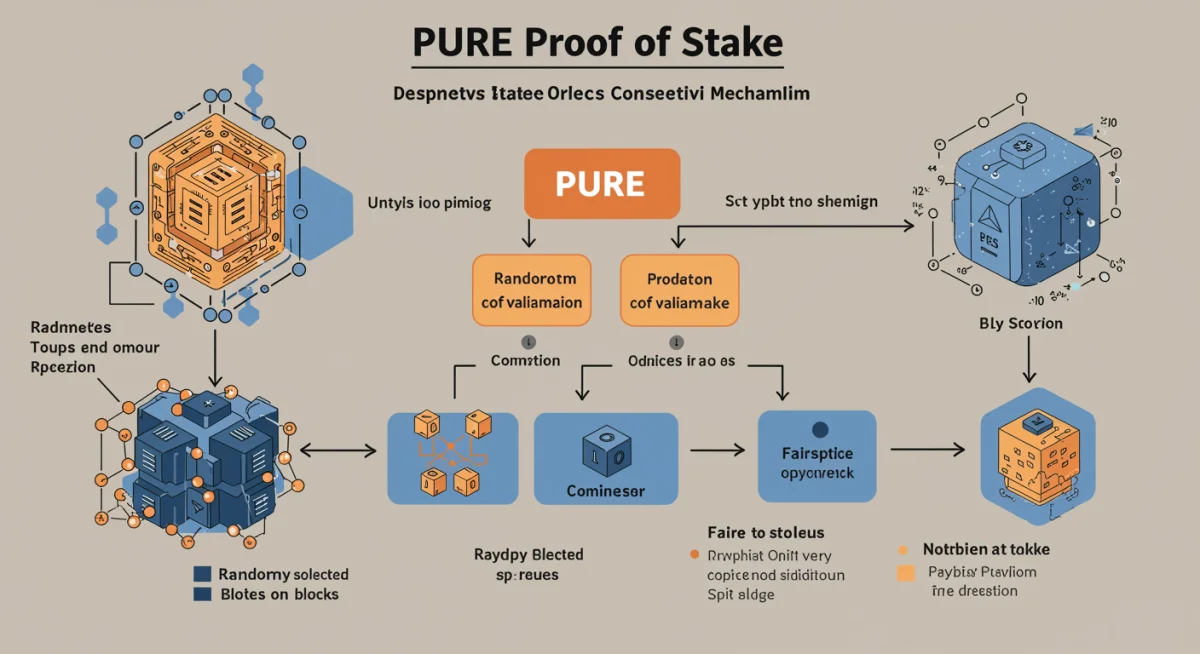
The core innovation lies in its block proposal and voting process. Participants are randomly and secretly selected to propose blocks and vote on their validity. This random selection is weighted by the amount of Algo (Algorand’s native cryptocurrency) they have staked, but the crucial aspect is that these selections are secret and non-reusable, making it incredibly difficult for malicious actors to target specific participants.
The Mechanism of Random Selection
The random selection process is a cornerstone of Algorand’s security model. Every block, a new committee of validators is chosen to propose the next block, and another committee is selected to verify it. This dynamic selection ensures that no single group can consistently control the network.
- Verifiable Random Function (VRF): Algorand uses a cryptographically secure VRF to select participants. This function is unpredictable, unbiased, and publicly verifiable, ensuring fairness.
- Secret Selection: Participants only know they have been selected to propose or validate a block at the moment their turn arrives, preventing pre-computation of attacks.
- Non-Reusable Committees: Once a committee has fulfilled its role for a specific block, new committees are formed for subsequent blocks, further enhancing security against collusion.
This approach significantly mitigates the risk of coordinated attacks, as attackers would need to corrupt a supermajority of the total stake in the network, a feat that becomes increasingly unfeasible as the network grows. The speed and efficiency of this process also contribute directly to Algorand’s ability to handle high transaction volumes without compromising security or decentralization.
In essence, Algorand’s PURE PoS mechanism fundamentally redefines how blockchain consensus is achieved, prioritizing a truly decentralized and secure foundation while maintaining high performance. This innovative design positions Algorand as a leading contender in the blockchain space, especially as the demand for reliable and efficient decentralized applications continues to surge in 2026.
Security Metrics and Performance in 2026
The security of a blockchain network is paramount, and Algorand’s PURE Proof-of-Stake has consistently demonstrated its resilience against various attack vectors. In 2026, the network’s security metrics reflect a mature and robust system, capable of withstanding sophisticated threats while maintaining continuous operation.
Algorand’s security model is built on probabilistic finality, meaning that once a block is committed, it is extremely unlikely to be reverted. This strong finality is crucial for applications requiring high transaction integrity, such as financial services and supply chain management.
Resistance to Common Attacks
One of the primary concerns for any PoS blockchain is its vulnerability to attacks where a powerful entity gains control. Algorand addresses this through its unique random and secret selection process for block proposers and validators. This design makes it virtually impossible for an attacker to know who the next block proposer or committee members will be in advance, thereby preventing targeted attacks.
- Sybil Attack Resistance: The requirement to stake Algo tokens significantly raises the cost for an attacker to create multiple fake identities, making Sybil attacks impractical.
- Long-Range Attack Prevention: Algorand’s unique approach to committee selection and block finality makes it difficult for attackers to rewrite history from a distant past, a vulnerability in some other PoS systems.
- Censorship Resistance: The random selection of validators ensures that no single entity can consistently censor transactions, as the composition of the validating committee changes with every block.
Furthermore, the network’s continuous monitoring and rapid response capabilities have evolved significantly by 2026. Automated threat detection systems and a dedicated security team work in tandem to identify and neutralize potential vulnerabilities before they can impact the network. The open-source nature of Algorand’s protocol also allows for broad community scrutiny, contributing to its overall security posture.
The performance in terms of security for Algorand in 2026 is a testament to its foundational design principles. The PURE PoS mechanism, coupled with ongoing advancements in cryptographic techniques and network monitoring, provides a highly secure environment for decentralized applications and transactions. This unwavering commitment to security is a key factor in Algorand’s growing adoption across various industries.
Decentralization Metrics and Governance Evolution
Decentralization is a core tenet of blockchain technology, and Algorand’s PURE Proof-of-Stake system prioritizes it as a fundamental design principle. In 2026, the network’s decentralization metrics reveal a continued commitment to distributing power and decision-making across a broad base of participants, moving away from centralized control.
The PURE PoS mechanism inherently promotes decentralization by ensuring that every Algo holder, regardless of the size of their stake, has an equal chance of being selected for participation in block consensus, proportional to their stake. This contrasts with delegated PoS systems where a few large delegates might wield disproportionate power.
Distribution of Participation Nodes
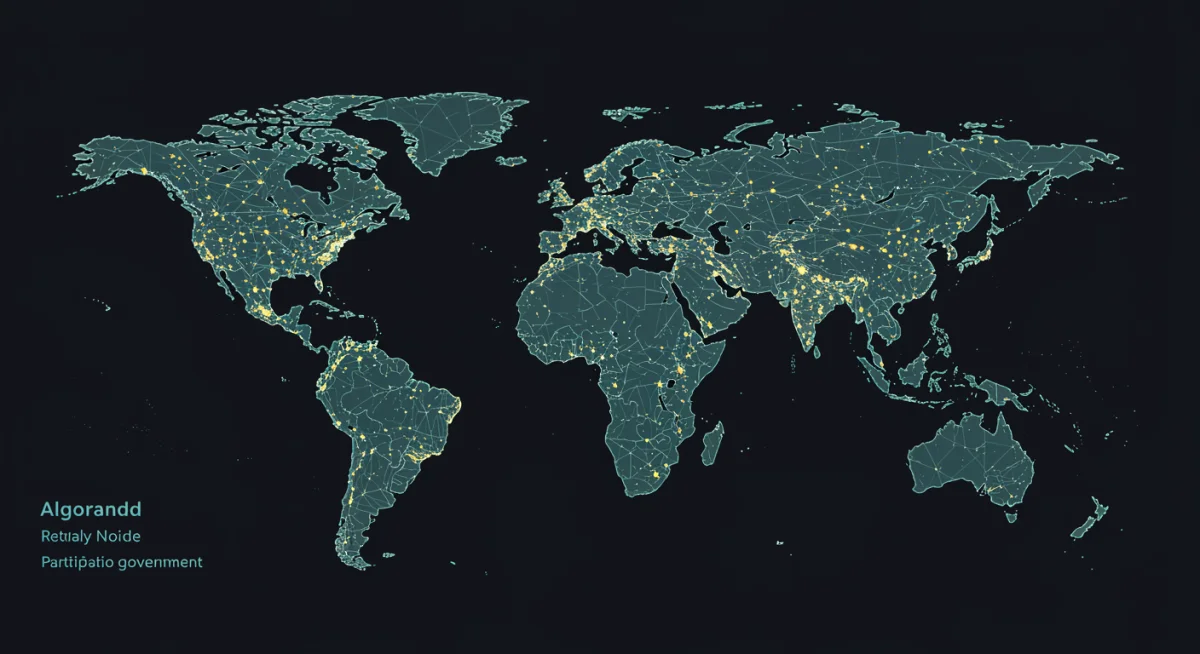
A key indicator of decentralization is the geographical and numerical distribution of participation nodes. By 2026, Algorand has seen a significant increase in the number of active participation nodes globally. These nodes are run by a diverse set of individuals, institutions, and community groups, preventing any single entity from dominating the network.
- Global Reach: Algorand participation nodes are spread across continents, minimizing the risk of localized outages or regulatory pressures impacting the entire network.
- Low Barrier to Entry: The technical requirements for running a participation node are relatively low, encouraging broader participation from the community.
- Community-Driven Growth: Initiatives to support and incentivize new node operators have contributed to the organic growth and distribution of the network.
The evolution of Algorand’s governance model also plays a crucial role in its decentralization. The Algorand Governance program, which allows Algo holders to vote on key protocol upgrades and resource allocation, has matured significantly. This participatory governance ensures that the direction of the network is determined by its stakeholders, rather than a select few.
In 2026, the governance framework has been refined to include more granular voting options and improved communication channels, making it easier for token holders to engage meaningfully. The transparency of governance decisions and the public availability of voting records further bolster trust and decentralization. Algorand’s ongoing efforts to enhance decentralization through both its consensus mechanism and governance structure solidify its position as a truly distributed ledger technology.
Scalability and Transaction Throughput
Beyond security and decentralization, scalability remains a critical factor for any blockchain aiming for mainstream adoption. Algorand’s PURE Proof-of-Stake architecture is explicitly designed to deliver high transaction throughput without compromising its fundamental principles. In 2026, the network’s performance metrics demonstrate its capacity to handle a substantial volume of transactions efficiently.
Algorand achieves high scalability through its unique consensus mechanism, which allows for near-instant transaction finality. Unlike other blockchains that might require multiple block confirmations, Algorand’s blocks are finalized in a single step, significantly reducing latency and increasing transaction processing speed.
Transaction Per Second (TPS) Benchmarks
By 2026, Algorand has consistently demonstrated impressive transaction per second (TPS) rates, capable of supporting a wide range of decentralized applications. These benchmarks are achieved while maintaining the integrity and security of the network, a testament to the efficiency of its PURE PoS design.
- Sub-Second Finality: Transactions on Algorand are typically finalized within 4.5 seconds, providing a user experience comparable to traditional payment systems.
- High Throughput: The network is designed to process thousands of transactions per second, with continuous optimizations aiming to further increase this capacity.
- Consistent Performance: Even under peak load conditions, Algorand maintains stable transaction times and low fees, ensuring a reliable experience for users and developers.
The efficiency of Algorand’s block propagation and validation also contributes to its scalability. The network uses a gossip protocol for rapid information dissemination, ensuring that new blocks are quickly broadcast and verified across the network. This minimizes delays and optimizes resource utilization.
Furthermore, ongoing research and development efforts are focused on implementing further scaling solutions, including state proofs and other layer-2 technologies, to ensure Algorand can meet future demands. These advancements aim to expand the network’s capabilities even further, supporting a global ecosystem of decentralized applications and services. Algorand’s commitment to scalability, combined with its robust security and decentralization, positions it as a future-proof blockchain solution.
Innovations and Ecosystem Growth
The vitality of a blockchain platform is often measured by its ability to innovate and foster a thriving ecosystem. In 2026, Algorand’s PURE Proof-of-Stake has not only maintained its core strengths but has also become a fertile ground for significant technological advancements and a rapidly expanding ecosystem of decentralized applications (dApps).
Algorand’s developer-friendly environment, coupled with its robust and predictable performance, has attracted a diverse array of projects ranging from decentralized finance (DeFi) to non-fungible tokens (NFTs), gaming, and enterprise solutions. The platform’s low transaction fees and high throughput make it an attractive choice for developers looking to build scalable and efficient applications.
Key Ecosystem Developments
The growth of the Algorand ecosystem in 2026 is characterized by several key developments, showcasing its versatility and increasing adoption.
- DeFi Expansion: A growing number of decentralized exchanges (DEXs), lending protocols, and stablecoins have chosen Algorand for their operations, benefiting from its speed and low costs.
- NFT Marketplaces: The platform has seen a surge in NFT projects and marketplaces, leveraging Algorand’s secure and efficient asset creation capabilities.
- Enterprise Adoption: Major corporations are exploring and implementing Algorand for various use cases, including supply chain management, digital identity, and real estate tokenization, drawn by its enterprise-grade security and scalability.
Algorand’s commitment to continuous innovation is also evident in its ongoing protocol upgrades and research initiatives. These efforts focus on enhancing smart contract capabilities, improving interoperability with other blockchain networks, and exploring new cryptographic primitives to further secure and optimize the platform. The introduction of advanced smart contract features has enabled developers to build more complex and sophisticated dApps, expanding the possibilities for what can be achieved on Algorand.
The collaborative spirit within the Algorand community, supported by the Algorand Foundation, has been instrumental in fostering this growth. Grants, educational programs, and hackathons continue to attract new talent and drive innovation, ensuring that Algorand remains at the forefront of blockchain technology. This dynamic ecosystem growth is a clear indicator of the long-term potential and relevance of Algorand’s PURE PoS in the decentralized world.
Challenges and Future Outlook for Algorand
While Algorand’s PURE Proof-of-Stake has demonstrated remarkable performance and resilience, no blockchain exists without its challenges. In 2026, Algorand faces a competitive landscape and ongoing technical hurdles that will shape its future trajectory. Understanding these challenges is crucial for a balanced assessment of its prospects.
One of the primary challenges for Algorand, like many other Layer 1 blockchains, is achieving broader market adoption and increasing its network effect. Despite its technological superiority in many aspects, gaining mindshare and attracting a larger user base against established competitors remains an ongoing effort.
Overcoming Adoption Hurdles
To accelerate adoption, Algorand must continue to focus on user experience, developer tooling, and strategic partnerships. Simplifying the onboarding process for new users and providing comprehensive resources for developers are key to expanding its reach.
- Developer Ecosystem: While growing, further investment in developer tools, documentation, and community support is essential to attract more talent.
- Marketing and Awareness: Enhancing global marketing efforts to educate the wider public about Algorand’s unique advantages and use cases is vital.
- Interoperability: Developing seamless bridges and protocols for interoperability with other major blockchains will be critical for expanding its utility and attracting liquidity.
Another area of focus is maintaining decentralization as the network scales. While PURE PoS is inherently decentralized, ensuring that participation remains diverse and accessible to all Algo holders is an ongoing commitment. This includes monitoring the distribution of staked Algo and encouraging new node operators to join the network.
Looking ahead, Algorand’s future outlook in 2026 remains promising, largely due to its robust technological foundation and dedicated community. Continued innovation in areas like quantum-resistant cryptography, enhanced privacy features, and further scaling solutions will be crucial. The ability to adapt to evolving market demands and regulatory landscapes will also play a significant role in its long-term success. Algorand’s proactive approach to these challenges positions it well for sustained growth and impact in the decentralized economy.
The Economic Impact of Algorand’s PURE PoS
The economic implications of Algorand’s PURE Proof-of-Stake extend far beyond its technical specifications, influencing everything from transaction costs to the overall stability of decentralized applications. In 2026, the economic model of Algorand continues to foster a predictable and efficient environment for both users and developers.
One of the most significant economic benefits is the predictability and low cost of transactions. Unlike some other blockchain networks where fees can fluctuate wildly based on network congestion, Algorand’s transaction fees remain consistently low and stable. This predictability is crucial for businesses and applications that rely on consistent operational costs.
Tokenomics and Value Proposition
The tokenomics of Algo, Algorand’s native cryptocurrency, are designed to support the network’s long-term sustainability and value proposition. The fixed supply and the distribution mechanism are intended to create a stable and appreciation-prone asset, incentivizing participation and long-term holding.
- Fixed Supply: A capped supply of Algo tokens helps to prevent inflation and preserve the asset’s value over time.
- Staking Rewards: Participants who stake their Algo and run participation nodes are rewarded, further incentivizing network security and decentralization.
- Developer Incentives: The Algorand Foundation often allocates funds to support developers building on the platform, fostering innovation and expanding the ecosystem’s economic output.
The economic model also promotes a fair distribution of wealth. Since every Algo holder has the potential to participate in consensus and earn rewards, the system avoids the concentration of power and wealth that can occur in some other blockchain models. This equitable distribution contributes to the network’s overall decentralization and resilience.
Furthermore, the high throughput and low latency of Algorand allow for the creation of new economic models and applications that were previously unfeasible on slower or more expensive blockchains. This includes micro-transactions, high-frequency trading, and complex financial instruments that require rapid and cost-effective execution. In 2026, Algorand’s economic framework continues to be a driving force behind its adoption, providing a stable and efficient platform for the future of finance and decentralized technology.
| Key Aspect | Brief Description |
|---|---|
| PURE Proof-of-Stake | Algorand’s unique consensus ensures security, decentralization, and scalability through random, secret selection of validators. |
| Security Resilience | Robust against Sybil and long-range attacks, with probabilistic finality for transaction integrity. |
| Decentralization Growth | Increasing global node distribution and participatory governance enhance network decentralization. |
| Scalability & Throughput | Achieves sub-second finality and high TPS, supporting diverse dApps with consistent performance. |
Frequently Asked Questions About Algorand’s PURE PoS
Algorand’s PURE PoS is unique due to its random and secret selection of validators and block proposers. This mechanism ensures that participants are chosen unpredictably and without prior knowledge, making it incredibly difficult for malicious actors to compromise the network effectively, thus enhancing security and decentralization.
Algorand ensures high security through its Verifiable Random Function (VRF) for committee selection, strong probabilistic finality, and resistance to common attacks like Sybil and long-range attacks. The constantly changing and secret validator committees prevent targeted attacks and censorship, maintaining network integrity.
The decentralization benefits of PURE PoS include a widely distributed network of participation nodes globally, a low barrier to entry for node operators, and a democratic governance model. This ensures that power is not concentrated in a few hands, promoting a truly decentralized and community-driven ecosystem.
In 2026, Algorand’s network demonstrates high scalability with sub-second transaction finality and impressive transactions per second (TPS) rates. Its efficient block propagation and validation, coupled with ongoing research into layer-2 solutions, enable it to support a vast array of high-volume decentralized applications efficiently.
The economic impact includes predictable, low transaction costs, a stable Algo tokenomics model with fixed supply, and staking rewards that incentivize participation. This framework fosters a fair and efficient environment, supporting new economic models and fostering a robust ecosystem for various decentralized applications and services.
Conclusion
In 2026, Algorand’s PURE Proof-of-Stake continues to solidify its position as a leading blockchain protocol, delivering on its promise of security, decentralization, and scalability. Its innovative consensus mechanism, robust security measures, and commitment to community-driven governance have fostered a thriving ecosystem of decentralized applications. While challenges related to broader adoption and competitive pressures remain, Algorand’s foundational strengths and continuous innovation position it for sustained growth and significant impact on the future of decentralized technology and digital finance.