Bitcoin Halving 2024: U.S. Investor Portfolio Impact Over 3 Months

The Bitcoin Halving 2024 significantly reshaped U.S. investor portfolios over three months by reducing new supply, prompting notable market adjustments and strategic re-evaluations among cryptocurrency holders.
The Bitcoin Halving 2024: How the Supply Shock Impacted U.S. Investor Portfolios Over 3 Months has been a topic of intense discussion and anticipation within the cryptocurrency world. This quadrennial event, designed to reduce the rate at which new bitcoins are created, fundamentally alters the supply dynamics of the digital asset. As U.S. investors navigated the immediate aftermath, understanding the nuances of this supply shock and its ripple effects became paramount for strategic portfolio management.
Understanding the Bitcoin Halving Mechanism
The Bitcoin halving is a pre-programmed event embedded in Bitcoin’s protocol, occurring approximately every four years or after every 210,000 blocks are mined. Its primary purpose is to control the inflation of Bitcoin by reducing the reward miners receive for validating transactions by half. This scarcity mechanism is central to Bitcoin’s economic model, differentiating it from traditional fiat currencies that can be printed at will.
Historically, past halvings have often preceded significant price appreciation, though this is not a direct causation but rather an observation of market dynamics reacting to reduced supply against potentially stable or increasing demand. The 2024 halving was the fourth such event, cutting the block reward from 6.25 BTC to 3.125 BTC. This reduction has profound implications for both miners and investors, as the cost of producing new Bitcoin effectively doubles for miners, potentially leading to a supply squeeze if demand remains robust.
The anticipation surrounding the 2024 halving was particularly heightened due to Bitcoin’s growing institutional adoption and the introduction of spot Bitcoin ETFs in the U.S. earlier in the year. These factors added layers of complexity to market predictions, as a broader range of investors, from retail to institutional, were now directly exposed to Bitcoin’s price movements.
The Scarcity Principle and Its Economic Impact
At its core, the Bitcoin halving reinforces the scarcity principle, a fundamental economic concept. By limiting the total supply of Bitcoin to 21 million units and systematically reducing the rate at which new units enter circulation, the protocol aims to make Bitcoin a deflationary asset over time. This design choice stands in stark contrast to inflationary fiat currencies, whose purchasing power tends to erode over time due to continuous money creation.
- Reduced Inflation Rate: The halving directly lowers the annual inflation rate of Bitcoin, making it scarcer.
- Increased Production Cost: For miners, the revenue per block is halved, increasing the effective cost of producing each new Bitcoin.
- Potential Price Appreciation: If demand holds steady or increases while new supply shrinks, economic theory suggests upward price pressure.
The economic impact extends beyond simple supply-demand dynamics. It also influences miner behavior, potentially leading to consolidation among more efficient mining operations and an exodus of less profitable ones. Such shifts can further centralize mining power, a point of ongoing debate within the crypto community, but also make the network more robust by ensuring only the most committed and efficient players remain.
Understanding these foundational aspects is crucial for any U.S. investor attempting to navigate the post-halving landscape. The event is not just a technical adjustment; it’s a recalibration of Bitcoin’s economic engine, with far-reaching consequences for its valuation and market perception.
Immediate Market Reactions Post-Halving
The immediate market reactions following the Bitcoin Halving 2024 were closely watched by U.S. investors, eager to see if historical patterns would repeat or if new dynamics would emerge. Unlike some previous halvings that saw a more immediate price surge, the 2024 event presented a nuanced picture in the first few weeks. Bitcoin’s price experienced some volatility, but not the explosive upward movement many retail investors might have anticipated, leading to a period of consolidation.
This initial stability or even slight downward pressure could be attributed to several factors. Market participants often “buy the rumor, sell the news,” meaning much of the halving’s potential impact might have been priced in well before the event itself. Furthermore, the broader macroeconomic environment, including interest rate expectations and geopolitical tensions, continued to exert influence, preventing Bitcoin from operating in a vacuum.
Institutional interest, particularly through the newly launched spot Bitcoin ETFs, played a significant role. While these ETFs provided a new avenue for traditional investors to gain exposure, their net flows fluctuated, sometimes offsetting organic buying pressure from other segments of the market. This interplay between retail anticipation, institutional flows, and macro factors created a complex market environment in the immediate aftermath.
Volatility and Consolidation Phases
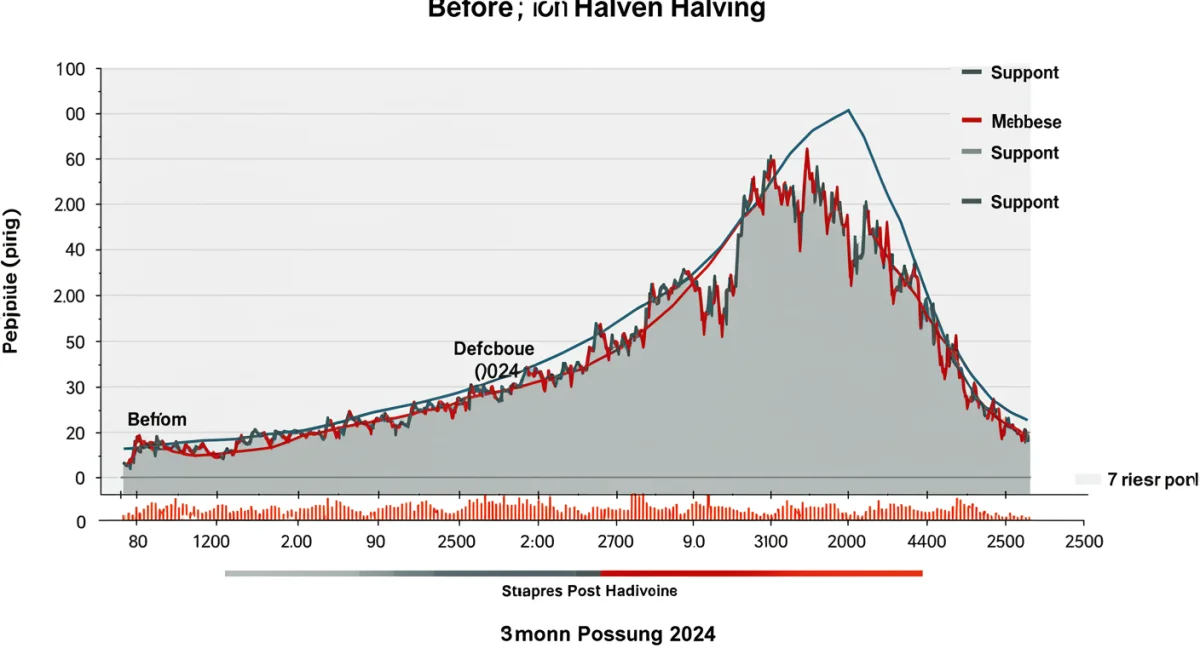
Post-halving, Bitcoin’s price action often enters a phase characterized by increased volatility followed by periods of consolidation. The 2024 halving was no exception. In the weeks immediately following the event, Bitcoin saw swings that tested both support and resistance levels. This volatility is a natural consequence of market participants attempting to reprice the asset based on the new supply dynamics and their evolving expectations.
- Initial Price Dips: Some profit-taking occurred as short-term traders exited positions accumulated in anticipation of the halving.
- Increased Trading Volume: Heightened activity indicated strong interest, but also a battle between bullish and bearish sentiments.
- Range-Bound Movement: After initial swings, Bitcoin often settled into a tighter trading range, signaling a period of price discovery and accumulation or distribution.
This consolidation period is crucial for setting the stage for future price movements. It allows the market to absorb the new supply shock, filter out speculative noise, and establish a new equilibrium point. For U.S. investors, particularly those with a long-term horizon, these phases offer opportunities to accumulate more Bitcoin at potentially favorable prices, assuming their conviction in the asset’s long-term value remains strong.
Analyzing the immediate market reactions requires a discerning eye, distinguishing between short-term noise and underlying trends. While the initial weeks might not have delivered the dramatic price surges some expected, they provided valuable insights into the market’s maturity and its response to a predictable, yet impactful, supply event.
Analyzing U.S. Investor Portfolio Adjustments
U.S. investors, ranging from individual retail participants to large institutional funds, undertook various portfolio adjustments in the three months following the Bitcoin Halving 2024. The supply shock necessitated a re-evaluation of risk, return expectations, and overall crypto allocation strategies. For many, the halving served as a catalyst to either de-risk or increase exposure, depending on their individual investment theses and market outlooks.
Retail investors often reacted with a mix of anticipation and caution. Those who had accumulated Bitcoin in the months leading up to the halving might have considered taking some profits, especially if the price had already seen significant appreciation. Others, viewing the halving as a long-term bullish signal, used any dips as opportunities to dollar-cost average into their positions. The availability of user-friendly trading platforms and educational resources played a key role in empowering these individual decisions.
Institutional investors, including hedge funds, family offices, and even some pension funds, approached the post-halving period with a more structured and data-driven methodology. Their adjustments often involved rebalancing existing crypto allocations, diversifying into other digital assets if Bitcoin’s performance was not meeting expectations, or even initiating new positions if they perceived a long-term value proposition emerging from the supply shock. The regulatory landscape and increasing clarity around crypto taxation in the U.S. also influenced these decisions, providing a more stable environment for larger capital deployments.
Diversification and Risk Management Strategies
In the wake of the halving, diversification became a prominent strategy for many U.S. investors. While Bitcoin remains the dominant cryptocurrency, the broader digital asset ecosystem offers a range of alternatives that can complement a Bitcoin-centric portfolio. Investors often looked into altcoins with strong fundamentals, promising use cases, or those that might benefit from narrative shifts in the post-halving environment.
- Altcoin Allocation: Diversifying into Ethereum, Solana, or other Layer 1 solutions to capture broader market growth.
- DeFi and NFT Exposure: Exploring decentralized finance protocols or non-fungible token markets for higher-risk, higher-reward opportunities.
- Stablecoin Utilization: Holding a portion of portfolios in stablecoins to manage volatility and capitalize on potential dips.
Risk management also took center stage. This included setting clear stop-loss orders, avoiding over-leveraging, and maintaining a disciplined investment approach. The post-halving period, with its inherent uncertainties, underscored the importance of not putting all eggs in one basket and being prepared for various market scenarios. For U.S. investors, understanding their personal risk tolerance and aligning their portfolio adjustments accordingly was paramount to navigating the evolving crypto landscape effectively.
Ultimately, the three months post-halving saw a dynamic period of adjustment among U.S. investors. These adjustments were not uniform but reflected a diverse set of strategies aimed at optimizing portfolios in response to Bitcoin’s renewed scarcity and the broader market’s reaction to it.
Impact on Bitcoin Mining Operations in the U.S.
The Bitcoin Halving 2024 had a direct and significant impact on mining operations within the U.S., a region that has become a global hub for Bitcoin mining, particularly after China’s crackdown. The halving event immediately reduced the block reward by 50%, forcing miners to adapt quickly to maintain profitability. This supply shock meant that for every block successfully mined, the revenue in Bitcoin terms was halved, effectively doubling the cost of producing each new Bitcoin.
U.S. mining companies, many of which are publicly traded, faced intense scrutiny from investors regarding their operational efficiency and future profitability. Companies with older, less efficient hardware found themselves at a competitive disadvantage, as the reduced reward made their operations unsustainable without significant upgrades or lower energy costs. Conversely, miners with state-of-the-art Application-Specific Integrated Circuit (ASIC) machines and access to cheap, often renewable, energy sources were better positioned to weather the storm and even expand their market share.
The halving accelerated the trend towards consolidation within the mining industry. Smaller, less capitalized miners struggled to compete, while larger, well-funded operations had the resources to invest in new hardware and optimize their energy consumption. This shift is not just about survival; it’s about reshaping the competitive landscape of Bitcoin mining in the U.S., potentially leading to a more professionalized and efficient sector.
Energy Consumption and Sustainability Concerns
One of the most critical aspects of the halving’s impact on U.S. mining operations revolves around energy consumption and sustainability. As the reward per block decreases, the incentive to find cheaper and more sustainable energy sources intensifies. This is not only for economic reasons but also due to increasing pressure from environmental, social, and governance (ESG) conscious investors and regulators.
- Shift to Renewable Energy: Many U.S. miners are actively seeking out renewable energy sources like solar, wind, and hydroelectric power to reduce operational costs and improve their ESG profile.
- Optimization of Cooling Systems: Investing in advanced cooling technologies to maximize the efficiency of mining hardware and reduce energy waste.
- Utilizing Stranded Energy: Tapping into otherwise wasted energy, such as flared natural gas, to power mining operations, turning an environmental liability into an economic asset.
The halving acts as a strong economic incentive for U.S. miners to innovate and become more efficient. Those who can adapt to the new economic realities by securing cheaper, cleaner energy and upgrading their hardware will likely thrive. Those who cannot may be forced out of the market. This dynamic ensures the Bitcoin network remains robust and decentralized in the long run, even as the rewards for securing it diminish.
For U.S. investors in mining stocks, understanding these operational shifts is crucial. The halving is not just a price event; it’s an industry-shaping force that demands strategic adjustments from the very companies responsible for creating new Bitcoin.
Macroeconomic Factors and Their Influence
Beyond the inherent supply shock of the Bitcoin Halving 2024, macroeconomic factors significantly influenced U.S. investor portfolios over the three months following the event. The global economic landscape, characterized by evolving monetary policies, inflation concerns, and geopolitical developments, did not operate in isolation from the cryptocurrency market. These broader forces often dictated investor sentiment and capital flows, sometimes overshadowing the immediate effects of the halving itself.
One of the most prominent macroeconomic influences was the stance of the U.S. Federal Reserve on interest rates. Expectations regarding rate cuts or hikes directly impacted the appetite for risk assets, including Bitcoin. A higher interest rate environment generally makes traditional, less volatile investments more attractive, potentially drawing capital away from cryptocurrencies. Conversely, a dovish stance from the Fed could fuel a risk-on environment, benefiting Bitcoin and other digital assets.
Inflation data also played a critical role. If inflation remained stubbornly high, some investors might view Bitcoin as a hedge against currency debasement, reinforcing its digital gold narrative. However, if inflation moderated, the urgency to seek alternative stores of value might lessen. Geopolitical events, such as conflicts or trade disputes, added another layer of uncertainty, often leading to flight-to-safety movements that could either benefit or hinder Bitcoin, depending on how it was perceived by different investor segments.

Correlation with Traditional Markets
The increasing institutionalization of Bitcoin has led to a noticeable, albeit sometimes fluctuating, correlation with traditional financial markets. This trend became even more apparent in the three months post-halving, as Bitcoin’s price movements often mirrored those of major U.S. stock indices or commodities.
- S&P 500 and Nasdaq: Bitcoin’s price often showed correlation with tech-heavy indices, indicating its perception as a growth asset.
- Gold Prices: In periods of economic uncertainty, Bitcoin sometimes moved in tandem with gold, reinforcing its safe-haven narrative for some investors.
- Dollar Index: A strong U.S. dollar could exert downward pressure on Bitcoin, as investors might prefer the stability of the greenback.
For U.S. investors, this growing correlation means that a robust understanding of traditional market indicators is becoming increasingly vital for making informed crypto investment decisions. Bitcoin is no longer an entirely uncorrelated asset; its price is now influenced by a complex web of global economic forces, making a holistic view of financial markets essential for effective portfolio management.
The interplay between the halving’s supply shock and these powerful macroeconomic currents created a dynamic and often unpredictable environment for U.S. investor portfolios. Navigating this complexity required not just crypto expertise, but also a keen awareness of broader economic trends.
Long-Term Outlook and Future Implications for U.S. Investors
Looking beyond the initial three months, the Bitcoin Halving 2024 sets the stage for significant long-term implications for U.S. investor portfolios. The reduced supply rate is a permanent change to Bitcoin’s economic model, and its effects are expected to unfold over extended periods, not just in the immediate aftermath. For those with a multi-year investment horizon, understanding these future implications is crucial for positioning portfolios effectively.
The scarcity narrative, reinforced by the halving, is likely to become even more pronounced as the total supply of Bitcoin approaches its cap of 21 million. This inherent deflationary characteristic could make Bitcoin an increasingly attractive asset in a world grappling with persistent inflationary pressures in traditional financial systems. U.S. investors, particularly those concerned about preserving purchasing power, may allocate a larger portion of their wealth to Bitcoin as a hedge against inflation.
Furthermore, the ongoing institutional adoption of Bitcoin is expected to continue, potentially driving demand even higher. The accessibility provided by spot Bitcoin ETFs in the U.S. has opened doors for a broader range of traditional investors, and as these products mature and gain wider acceptance, they could channel substantial capital into the Bitcoin ecosystem. This steady influx of institutional funds could provide a more stable and sustained demand-side pressure, complementing the supply-side shock from the halving.
Technological Advancements and Network Growth
Beyond price mechanics, the long-term outlook for Bitcoin is also shaped by continuous technological advancements and network growth. These factors contribute to Bitcoin’s utility and security, enhancing its value proposition for U.S. investors.
- Lightning Network Adoption: Increased use of the Lightning Network for faster, cheaper transactions enhances Bitcoin’s utility as a medium of exchange.
- Ordinals and BRC-20 Tokens: Innovations like Ordinals and BRC-20 tokens are expanding Bitcoin’s capabilities beyond just a store of value, creating new use cases and demand.
- Security Enhancements: Ongoing developments in cryptography and network security further solidify Bitcoin’s position as a robust and tamper-proof digital asset.
These technological improvements contribute to a more vibrant and functional ecosystem, attracting more users and developers. For U.S. investors, this means that Bitcoin’s value is not solely dependent on its scarcity but also on its evolving utility and the strength of its underlying technology. A growing and more versatile Bitcoin network presents a compelling case for long-term capital appreciation.
Ultimately, the Bitcoin Halving 2024 is best viewed as a waypoint in Bitcoin’s journey, rather than a final destination. Its long-term implications underscore Bitcoin’s role as a scarce digital asset with a robust and evolving ecosystem, making it a critical consideration for U.S. investors planning for the future.
Challenges and Risks for U.S. Bitcoin Investors Post-Halving
While the Bitcoin Halving 2024 presents numerous opportunities, U.S. investors must also be acutely aware of the challenges and risks that persist in the post-halving environment. The cryptocurrency market, by its very nature, is subject to rapid fluctuations and external pressures that can impact portfolio performance. A balanced perspective, acknowledging both potential upsides and inherent downsides, is essential for prudent investment decisions.
Regulatory uncertainty remains a significant challenge. Despite some progress with spot Bitcoin ETFs, the broader regulatory landscape for cryptocurrencies in the U.S. is still evolving. Potential new legislation, tax changes, or enforcement actions could introduce volatility and impact investor sentiment. U.S. investors must stay informed about these developments, as regulatory shifts can have profound effects on market access, liquidity, and the overall perception of digital assets.
Market volatility is another inherent risk. While Bitcoin’s long-term trend has historically been upward, its price can experience sharp and unpredictable swings in the short to medium term. These fluctuations can be driven by a myriad of factors, including macroeconomic news, technological breakthroughs (or setbacks), and even social media narratives. Investors must be prepared for potential drawdowns and avoid making emotional decisions based on short-term price movements.
Competition and Technological Obsolescence
The cryptocurrency space is highly dynamic and competitive. While Bitcoin holds a dominant position, it faces competition from other digital assets that offer different features, scalability solutions, or use cases. For U.S. investors, underestimating this competitive landscape could lead to missed opportunities or overexposure to a single asset.
- Emerging Altcoins: New cryptocurrencies and blockchain projects are continuously emerging, some with innovative technologies that could challenge existing paradigms.
- Scalability Solutions: Other blockchains are actively developing solutions to overcome transaction speed and cost limitations, which could attract users and developers.
- Quantum Computing Threats: Although distant, the theoretical threat of quantum computing to current cryptographic standards poses a long-term risk to all blockchain assets, including Bitcoin.
Technological obsolescence, while perhaps less immediate for Bitcoin due to its robust network and developer community, is a theoretical risk in any rapidly advancing technological field. While Bitcoin has proven resilient, the pace of innovation in blockchain technology suggests that investors should always remain vigilant and adaptable.
For U.S. investors, navigating these challenges and risks requires continuous education, a diversified approach, and a clear understanding of their investment goals and risk tolerance. The post-halving era, while promising, is not without its complexities, demanding careful consideration and strategic planning.
Strategies for U.S. Investors in a Post-Halving World
In the evolving landscape shaped by the Bitcoin Halving 2024, U.S. investors need well-defined strategies to optimize their portfolios and mitigate risks. The post-halving period is not a set-it-and-forget-it scenario; it demands active management and a nuanced understanding of market dynamics. Successful strategies often blend long-term conviction with tactical adjustments based on prevailing conditions.
One fundamental strategy is dollar-cost averaging (DCA). This approach involves investing a fixed amount of money at regular intervals, regardless of Bitcoin’s price. DCA helps mitigate the impact of volatility by averaging out the purchase price over time, reducing the risk of buying in at a market peak. For U.S. investors looking to build a long-term position, especially after the halving, DCA remains a robust and disciplined method.
Another crucial strategy involves thorough due diligence on any cryptocurrency investment. This extends beyond Bitcoin to include altcoins and other digital assets. Investors should research the underlying technology, the development team, community support, use cases, and tokenomics. A strong understanding of these fundamentals helps distinguish legitimate projects from speculative bubbles, particularly in a market that can be prone to hype cycles.
Portfolio Rebalancing and Tax Considerations
Regular portfolio rebalancing is essential. As Bitcoin’s price fluctuates, its allocation within a portfolio can shift, potentially leading to an overweight or underweight position relative to an investor’s target allocation. Periodically rebalancing—selling some Bitcoin if its proportion grows too large or buying more if it shrinks—helps maintain the desired risk profile and asset diversification.
- Setting Target Allocations: Define clear percentage targets for Bitcoin and other assets within the portfolio.
- Scheduled Reviews: Conduct portfolio reviews quarterly or semi-annually to assess and adjust allocations.
- Tax Loss Harvesting: Utilize market downturns to potentially harvest losses for tax purposes, offsetting gains.
Tax considerations are paramount for U.S. investors. The IRS treats cryptocurrency as property, meaning capital gains and losses apply. Investors must maintain meticulous records of their transactions, including purchase dates, prices, and sale prices, to accurately report their crypto activities. Consulting with a tax professional specializing in digital assets can help navigate the complexities of crypto taxation and ensure compliance.
Ultimately, a successful strategy in the post-halving world for U.S. investors is characterized by patience, discipline, and continuous learning. The halving is a powerful event, but its full impact unfolds over time, rewarding those who approach the market with a well-thought-out and adaptable plan.
| Key Impact Area | Brief Description of Impact |
|---|---|
| Supply Shock | New Bitcoin issuance halved, increasing scarcity and potentially driving long-term value. |
| Market Volatility | Initial post-halving period saw price fluctuations and consolidation as market adjusted. |
| Miner Profitability | Reduced block rewards pressured less efficient U.S. miners, favoring those with lower energy costs. |
| Investor Strategy | U.S. investors re-evaluated risk, diversified portfolios, and considered long-term accumulation. |
Frequently Asked Questions About the Bitcoin Halving 2024
The primary effect of the Bitcoin Halving is to cut the rate at which new bitcoins are created by half. This reduction in new supply enhances Bitcoin’s scarcity, making it a more deflationary asset over time and potentially increasing its long-term value against sustained demand.
In the first three months post-halving, U.S. investor portfolios saw varied reactions, including initial volatility followed by consolidation. Many investors engaged in rebalancing, risk assessment, and strategic accumulation, particularly through dollar-cost averaging, adapting to the new supply dynamics and macroeconomic factors.
Unlike some previous halvings, the 2024 event did not immediately trigger a dramatic price surge. Much of the anticipated impact might have been priced in beforehand, and broader macroeconomic conditions also influenced market behavior, leading to a more nuanced period of price discovery and consolidation.
U.S. Bitcoin mining operations experienced significant pressure due to the halved block reward. This led to increased focus on operational efficiency, adoption of renewable energy, and consolidation within the industry, favoring miners with advanced hardware and access to cheaper power sources.
Long-term implications for U.S. investors include reinforced scarcity, potential for sustained price appreciation due to institutional demand, and continued technological advancements enhancing Bitcoin’s utility. It solidifies Bitcoin’s role as a deflationary asset and a hedge against traditional market inflation.
Conclusion
The Bitcoin Halving 2024 represented a pivotal moment for the cryptocurrency market, profoundly impacting U.S. investor portfolios over the subsequent three months. The reduction in new Bitcoin supply, a programmed feature of its protocol, initiated a complex interplay of market reactions, strategic adjustments by investors, and significant shifts within the mining industry. While immediate explosive price action wasn’t uniformly observed, the halving firmly reinforced Bitcoin’s scarcity narrative, compelling both retail and institutional investors to re-evaluate their positions and strategies. Macroeconomic factors continued to weave their influence, demonstrating Bitcoin’s increasing integration into the broader financial ecosystem. Moving forward, the halving’s long-term implications underscore Bitcoin’s potential as a deflationary asset and a key component of diversified portfolios, provided investors navigate the persistent challenges of volatility, regulatory evolution, and market competition with informed discipline.