Auditing Blockchain Security: 2026 Framework for US Firms to Cut Risk by 25%

Auditing blockchain security is crucial for US companies to mitigate evolving cyber threats, requiring a comprehensive 2026 framework that integrates proactive measures, regulatory adherence, and advanced technological solutions to reduce overall risk by 25%.
In an increasingly digitized world, the integrity and security of blockchain systems are paramount, especially for US companies navigating complex regulatory landscapes. The need for robust auditing blockchain security has never been more critical, with projections indicating that a well-implemented framework by 2026 could significantly reduce organizational risk by as much as 25%. This article delves into a step-by-step approach designed to fortify your blockchain infrastructure against emerging threats and ensure compliance.
Understanding the Evolving Threat Landscape for Blockchain
The decentralized nature of blockchain technology, while offering immense benefits in transparency and immutability, also presents unique security challenges. As the adoption of blockchain intensifies across various sectors in the US, so does the sophistication of cyber threats targeting these systems. Understanding this constantly evolving landscape is the first critical step in developing an effective security audit strategy.
Cybercriminals are continually devising new methods to exploit vulnerabilities within smart contracts, consensus mechanisms, and underlying network infrastructure. Traditional cybersecurity measures often fall short in addressing these novel threats, necessitating specialized approaches tailored to blockchain’s unique architecture. This includes understanding attack vectors specific to decentralized applications (dApps), tokenomics, and cross-chain interactions.
Common Blockchain Vulnerabilities
Several types of vulnerabilities are frequently exploited in blockchain systems, ranging from coding errors to systemic design flaws. Identifying these common pitfalls is essential for any comprehensive audit.
- Smart Contract Bugs: Errors in smart contract code can lead to significant financial losses, as seen in numerous historical exploits. These can include reentrancy attacks, integer overflows, and access control issues.
- Consensus Mechanism Attacks: Although rare, attacks like 51% attacks on proof-of-work chains can undermine the integrity of the entire network.
- Private Key Compromise: Loss or theft of private keys remains a primary vector for unauthorized access to digital assets.
- Front-Running and Sandwich Attacks: Exploiting transaction ordering on decentralized exchanges (DEXs) to profit at the expense of other users.
The dynamic nature of these threats demands continuous vigilance and a proactive auditing posture. US companies must move beyond reactive security measures and embrace predictive analytics and threat intelligence to stay ahead of malicious actors. This proactive stance ensures that potential vulnerabilities are identified and remediated before they can be exploited, thereby strengthening the overall security posture of blockchain implementations.
Establishing a 2026 Blockchain Security Audit Framework
To effectively reduce risk by 25% by 2026, US companies need a structured and adaptable framework for auditing blockchain security. This framework should integrate best practices from traditional cybersecurity with specialized blockchain security methodologies, ensuring a holistic approach to protection. It’s not merely about identifying flaws, but about building resilience into the very fabric of the blockchain system.
A successful framework begins with clear objectives: defining what assets are being protected, what risks are most probable, and what compliance standards must be met. This foundational understanding allows for a tailored audit plan that addresses specific organizational needs and regulatory requirements. Without a clear scope, audits can become unfocused and less effective in identifying critical vulnerabilities.
Key Components of the 2026 Framework
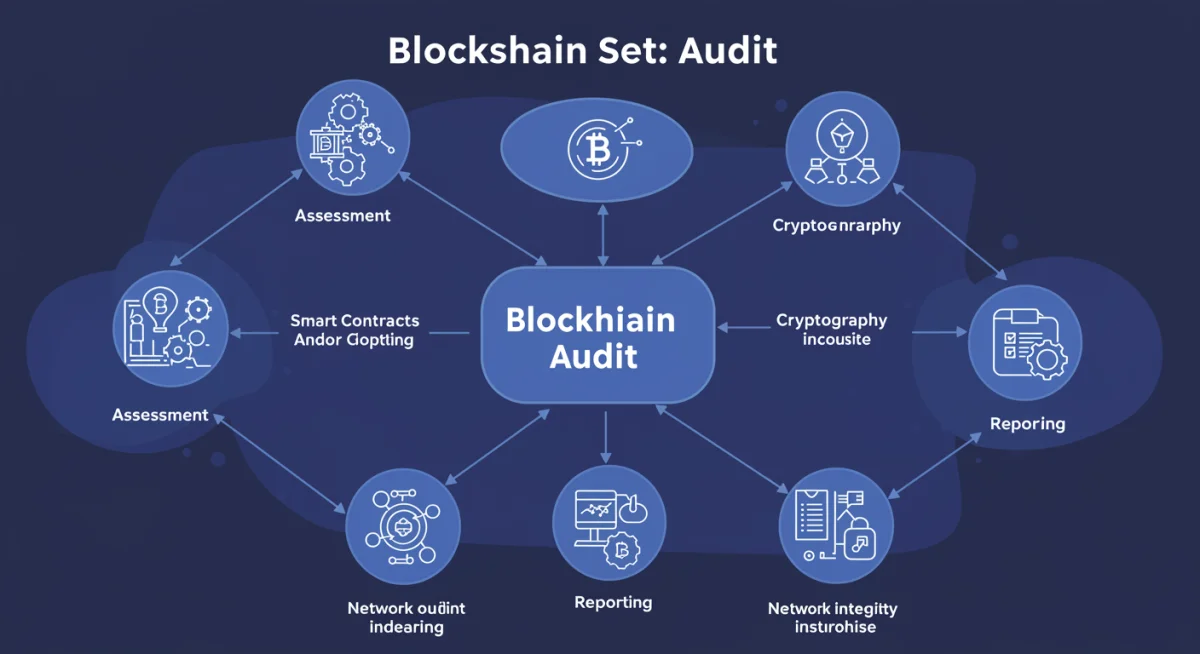
The proposed 2026 framework for auditing blockchain security encompasses several crucial stages, each building upon the last to create a robust security posture.
- Pre-Audit Planning and Scope Definition: Clearly define the scope of the audit, including the specific blockchain components (e.g., smart contracts, protocols, network infrastructure, dApps) and the desired security outcomes. This phase also involves assembling a qualified audit team and establishing communication protocols.
- Threat Modeling and Risk Assessment: Identify potential threats, vulnerabilities, and attack vectors specific to the blockchain implementation. Evaluate the likelihood and impact of these risks to prioritize remediation efforts.
- Code Review and Static Analysis: Conduct a thorough review of all smart contract code and associated logic using both manual inspection and automated static analysis tools to detect common vulnerabilities and adherence to coding standards.
- Dynamic Analysis and Penetration Testing: Simulate real-world attacks on the live or test environment of the blockchain system to uncover runtime vulnerabilities, configuration weaknesses, and potential exploits that static analysis might miss.
- Compliance and Regulatory Review: Ensure the blockchain system adheres to relevant US regulations, such as those from the SEC, CFTC, and FinCEN, as well as industry-specific standards like NIST or ISO 27001.
- Post-Audit Reporting and Remediation: Document all findings, including identified vulnerabilities, their severity, and recommended remediation steps. Work with development teams to implement fixes and re-verify their effectiveness.
This comprehensive framework ensures that all layers of the blockchain system are scrutinized, from the underlying cryptographic primitives to the user-facing decentralized applications. By systematically addressing each component, US companies can build a resilient blockchain infrastructure capable of withstanding sophisticated cyberattacks and maintaining operational integrity.
Regulatory Compliance and Legal Considerations for US Companies
For US companies, auditing blockchain security extends beyond technical assessments to include a rigorous review of regulatory compliance and legal considerations. The evolving regulatory landscape for blockchain and digital assets in the United States requires diligent attention to ensure operations remain within legal boundaries and avoid costly penalties. Non-compliance can lead to severe financial repercussions, reputational damage, and operational disruptions.
Understanding the specific mandates from various federal and state agencies is paramount. This includes guidelines from the Securities and Exchange Commission (SEC) regarding digital assets as securities, the Commodity Futures Trading Commission (CFTC) for commodities, and the Financial Crimes Enforcement Network (FinCEN) for anti-money laundering (AML) and KYC requirements. Each of these agencies has a stake in how blockchain technologies are developed and deployed.
Navigating Key US Regulations
Compliance with US regulations is a multi-faceted challenge, requiring continuous monitoring and adaptation as new guidance emerges. A robust audit framework must explicitly incorporate these legal checks.
- SEC Guidelines: Determine if digital assets fall under the definition of a security, impacting issuance, trading, and disclosure requirements. This often involves the Howey Test and subsequent interpretations.
- CFTC Oversight: For digital assets classified as commodities, adhere to principles of market integrity and prevention of manipulation.
- FinCEN AML/KYC: Implement robust measures to prevent illicit financial activities, including identity verification for users and transaction monitoring. This is particularly crucial for decentralized finance (DeFi) platforms.
- State-Specific Regulations: Be aware of state-level licenses and regulations, such as New York’s BitLicense, which can impose additional compliance burdens.
- Data Privacy Laws: Ensure compliance with data privacy regulations like the California Consumer Privacy Act (CCPA) and other emerging state laws, especially when handling personal data on or off-chain.
Integrating these legal and regulatory checks into the auditing process ensures that technical security measures are complemented by a strong legal foundation. It helps US companies demonstrate due diligence to regulators and stakeholders, fostering trust and reducing the likelihood of legal challenges. Furthermore, proactive engagement with regulatory bodies can help shape future policies and ensure industry best practices are recognized.
Advanced Tools and Methodologies for 2026 Audits
As blockchain technology advances, so too must the tools and methodologies used for auditing its security. The 2026 framework emphasizes the adoption of advanced, AI-driven tools and sophisticated analytical techniques to provide deeper insights into vulnerabilities and potential attack vectors. Relying solely on manual code reviews or traditional penetration testing will no longer be sufficient to keep pace with the rapidly evolving threat landscape.
Modern auditing requires a blend of automated and manual processes, leveraging the strengths of each. Automated tools can quickly scan vast amounts of code and identify common patterns of vulnerabilities, freeing up human auditors to focus on more complex logical flaws and design weaknesses that require nuanced understanding. This synergy enhances both the speed and thoroughness of the audit process.
Cutting-Edge Audit Technologies
The next generation of blockchain security audits will heavily depend on innovative technologies and methodologies.
- AI-Powered Static Analysis: Tools that use machine learning to analyze smart contract code for subtle vulnerabilities, predict potential exploits, and even suggest remediation.
- Formal Verification: Mathematical methods to prove the correctness of smart contract logic, ensuring that the code behaves exactly as intended under all possible conditions and eliminating entire classes of bugs.
- Automated Penetration Testing Platforms: Advanced platforms that can autonomously discover and exploit vulnerabilities in live blockchain environments, providing real-time feedback on system resilience.
- On-Chain Monitoring Solutions: Continuous surveillance of blockchain transactions and smart contract interactions to detect anomalous behavior, potential attacks, or deviations from expected protocol execution.
- Decentralized Security Audits (DSAs): Leveraging blockchain itself to create transparent, verifiable, and community-driven audit processes, potentially involving bug bounties and decentralized security expertise.
These advanced tools empower auditors to uncover hidden flaws and provide a more comprehensive assessment of blockchain security. By integrating these technologies into their 2026 audit framework, US companies can significantly enhance their defensive capabilities, making their blockchain systems more robust and less susceptible to exploitation. The emphasis here is on predictive and preventative measures, rather than purely reactive ones.
Implementing a Continuous Audit Strategy
Blockchain systems are not static; they evolve with new features, upgrades, and integrations. Therefore, a one-time security audit, no matter how thorough, is insufficient to maintain long-term security. The 2026 framework for US companies advocates for a continuous audit strategy, embedding security checks throughout the development lifecycle and beyond. This ensures that new vulnerabilities are identified and addressed as soon as they emerge, rather than waiting for periodic reviews.
A continuous audit approach fosters a culture of security within the organization, making security an integral part of every stage of blockchain development and operation. It moves away from the traditional, siloed audit model to one where security is a shared responsibility, continuously monitored and improved. This proactive posture is critical for managing the dynamic risks inherent in blockchain technology.
Elements of Continuous Blockchain Security Auditing
Building a continuous audit strategy involves integrating security into every phase of the blockchain project lifecycle.
- Security by Design: Incorporate security considerations from the initial design phase of any blockchain project, ensuring that security best practices are baked into the architecture.
- Automated Testing in CI/CD: Integrate automated security tests (static analysis, unit tests, integration tests) into continuous integration/continuous deployment (CI/CD) pipelines to catch vulnerabilities early.
- Regular Code Reviews: Beyond initial audits, schedule periodic manual and automated code reviews for smart contracts and blockchain applications, especially after significant updates or feature additions.
- Bug Bounty Programs: Establish ongoing bug bounty programs to incentivize ethical hackers to discover and report vulnerabilities, providing an external, continuous security assessment.
- Threat Intelligence Integration: Continuously monitor global threat intelligence feeds for new attack vectors, exploits, and vulnerabilities specific to blockchain technologies, and update defense mechanisms accordingly.
- Incident Response Planning: Develop and regularly test comprehensive incident response plans tailored to blockchain security incidents, ensuring rapid detection, containment, and recovery.
By adopting a continuous audit strategy, US companies can create a resilient and adaptive blockchain security posture. This ongoing vigilance not only helps in reducing existing risks but also in proactively mitigating future threats, aligning with the goal of a 25% risk reduction by 2026. It ensures that security is not an afterthought but a core, embedded component of blockchain operations.

Building an Expert Blockchain Security Team
No matter how sophisticated the tools or robust the framework, the human element remains central to effective blockchain security auditing. Building and nurturing an expert blockchain security team is a critical pillar of the 2026 framework for US companies. These professionals possess the specialized knowledge, analytical skills, and foresight required to interpret complex audit findings, devise innovative solutions, and stay ahead of emerging threats. A strong team acts as the brain behind the operational security.
The demand for skilled blockchain security professionals far outstrips supply, making talent acquisition and retention a significant challenge. Companies must invest in continuous training, certification, and fostering a collaborative environment to develop and maintain a high-caliber security team. This investment is not just in individual skills but in the collective intelligence and adaptability of the entire security operation.
Essential Skills for a Blockchain Security Auditor
A proficient blockchain security auditor requires a diverse set of skills, blending traditional cybersecurity expertise with specialized blockchain knowledge.
- Deep Understanding of Blockchain Fundamentals: Expertise in cryptographic principles, consensus mechanisms (e.g., Proof of Work, Proof of Stake), and various blockchain architectures (e.g., Ethereum, Solana, Hyperledger).
- Smart Contract Programming: Proficiency in Solidity, Rust, or other smart contract languages, coupled with an understanding of common smart contract vulnerabilities.
- Web3 and dApp Security: Knowledge of security best practices for decentralized applications, including front-end, back-end, and API security in a Web3 context.
- Penetration Testing and Ethical Hacking: Hands-on experience in identifying and exploiting vulnerabilities in complex systems, with a focus on blockchain-specific attack vectors.
- Cryptographic Analysis: Ability to assess the strength and correct implementation of cryptographic primitives used within blockchain protocols.
- Regulatory and Compliance Knowledge: Familiarity with US regulatory frameworks (SEC, CFTC, FinCEN) and their implications for blockchain projects.
- Risk Management and Communication: Skills in assessing and communicating risks to both technical and non-technical stakeholders, providing clear recommendations for remediation.
Investing in such a team not only strengthens the organization’s immediate security posture but also positions it for long-term resilience and innovation in the blockchain space. A highly skilled team can proactively identify and mitigate risks, turning potential vulnerabilities into opportunities for enhanced security, thereby contributing significantly to the 25% risk reduction goal by 2026.
Measuring and Reporting Audit Effectiveness
The final, yet crucial, step in the 2026 framework for auditing blockchain security is the ability to effectively measure and report on the audit’s effectiveness. Without clear metrics and transparent reporting, it’s impossible to ascertain whether the risk reduction goal of 25% is being met or to justify further investment in security measures. This phase transforms raw audit findings into actionable intelligence for leadership and stakeholders.
Effective reporting goes beyond a simple list of vulnerabilities; it provides context, quantifies risk, and outlines the impact of remediation efforts. It allows US companies to track progress over time, identify areas for improvement, and demonstrate a tangible return on investment for their security expenditures. Transparency in reporting also builds trust with users, investors, and regulators, reinforcing the organization’s commitment to security.
Key Metrics and Reporting Practices
To accurately measure and report on audit effectiveness, specific metrics and robust reporting practices are essential.
- Vulnerability Density: Track the number of vulnerabilities found per line of code or per feature, and monitor its reduction over time.
- Time to Remediation: Measure the average time taken to fix identified vulnerabilities, especially critical ones. Faster remediation indicates a more agile security posture.
- Number of Incidents Post-Audit: A reduction in security incidents after an audit and remediation indicates effectiveness.
- Compliance Score: Develop a scoring system to track adherence to regulatory requirements and industry standards, showing improvement over time.
- Cost of Breach Avoidance: Estimate the potential financial losses averted by successfully mitigating vulnerabilities, demonstrating the economic value of security audits.
- Security Posture Score: A composite score reflecting various security parameters (e.g., number of open vulnerabilities, patch rates, employee training completion) provides an overall view of security health.
Implementing these metrics allows US companies to not only demonstrate the efficacy of their blockchain security audits but also to make data-driven decisions for future security strategies. This systematic approach to measurement and reporting is fundamental to achieving and verifying the ambitious goal of a 25% risk reduction by 2026, ensuring accountability and continuous improvement in blockchain security.
| Key Audit Area | Brief Description |
|---|---|
| Threat Landscape Analysis | Understanding evolving cyber threats specific to blockchain to inform audit strategy. |
| 2026 Audit Framework | Step-by-step process for comprehensive blockchain security assessment. |
| Regulatory Compliance | Ensuring adherence to US federal and state blockchain regulations. |
| Continuous Auditing | Integrating ongoing security checks throughout the blockchain development lifecycle. |
Frequently Asked Questions About Blockchain Security Audits
Auditing blockchain security is crucial for US companies by 2026 due to the rapid evolution of cyber threats and stringent regulatory requirements. A proactive audit framework helps identify vulnerabilities, ensure compliance with US laws, and protect digital assets, aiming to significantly reduce overall risk by 25% and maintain stakeholder trust.
The 2026 framework typically includes pre-audit planning, threat modeling, code review, dynamic analysis (penetration testing), regulatory compliance checks, and post-audit reporting. It’s designed to cover all layers of a blockchain system, from smart contracts to network infrastructure, ensuring a comprehensive security assessment and risk mitigation strategy.
US regulations from agencies like the SEC, CFTC, and FinCEN significantly impact blockchain security audits by imposing strict requirements on digital asset classification, anti-money laundering (AML), and data privacy. Audits must ensure technical security measures align with these legal mandates to avoid penalties and maintain operational legality within the United States.
Advanced tools for 2026 audits include AI-powered static analysis, formal verification, automated penetration testing platforms, and on-chain monitoring solutions. These technologies enhance the speed and depth of vulnerability detection, allowing auditors to uncover complex flaws that traditional methods might miss, thus improving overall system resilience.
A continuous audit strategy is vital because blockchain systems are dynamic and constantly evolving. It integrates security checks throughout the development lifecycle, ensuring new vulnerabilities are addressed promptly. This ongoing vigilance, including automated testing and bug bounty programs, helps maintain long-term security, adapting to emerging threats effectively.
Conclusion
The landscape of blockchain technology is rapidly expanding, and with it, the imperative for robust security measures. For US companies, embracing a sophisticated framework for auditing blockchain security by 2026 is not merely a recommendation but a strategic necessity. By meticulously implementing a step-by-step approach that covers threat intelligence, regulatory compliance, advanced tooling, continuous auditing, and expert team building, organizations can realistically aim for a 25% reduction in risk. This proactive stance ensures not only the protection of valuable digital assets and proprietary information but also fosters trust among stakeholders and positions companies at the forefront of secure blockchain innovation. The future of decentralized technologies hinges on the strength of their security, and diligent auditing is the cornerstone of that strength.