Bitcoin Transaction Fees 2026: Compare US Exchanges & Save Up to 15%
Understanding Bitcoin transaction fees across major US exchanges in 2026 is crucial for investors aiming to optimize costs and achieve significant savings, potentially up to 15%, on their cryptocurrency transactions.
As the cryptocurrency market matures, navigating the complexities of transaction fees becomes increasingly vital for both novice and experienced investors. In 2026, understanding Bitcoin transaction fees across major US exchanges is no longer just good practice – it’s a necessity for maximizing your returns and potentially saving up to 15% on your crypto activities. This comprehensive guide delves into the nuances of these fees, offering a detailed comparison and analysis to help you make informed decisions.
The Evolving Landscape of Bitcoin Transaction Fees in 2026
The world of Bitcoin transactions is dynamic, with fees constantly shifting due to network congestion, exchange policies, and market demand. In 2026, these factors continue to play a pivotal role in determining the actual cost of moving your Bitcoin. It’s not just about the advertised rates; often, hidden costs or variable structures can significantly impact your overall expenses.
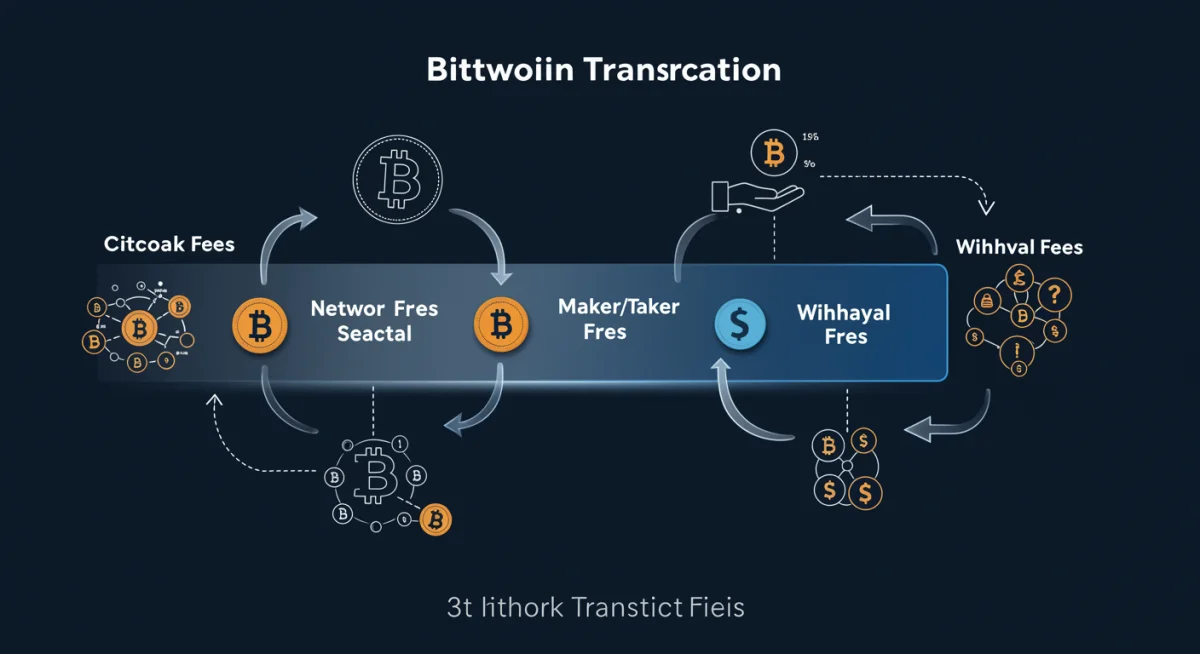
Understanding the different types of fees is the first step towards smarter trading. These typically include network fees, exchange trading fees (maker/taker), and withdrawal fees. Each component contributes to the final cost, and their interplay can vary wildly between platforms, making a direct comparison essential.
Network Fees: The Unavoidable Cost
Network fees, also known as miner fees, are paid to the Bitcoin miners who process and validate transactions on the blockchain. These fees are not controlled by exchanges but are instead determined by the current demand for block space and the size of your transaction in bytes. Higher network congestion generally leads to higher fees as users bid for faster inclusion in a block.
- Congestion Impact: During peak demand, network fees can spike dramatically, sometimes making small transactions economically unfeasible.
- Transaction Size: Larger transactions (more inputs/outputs) require more block space, thus incurring higher fees.
- Dynamic Adjustments: Wallets and exchanges often use algorithms to estimate optimal fees, but manual adjustments are sometimes possible for users willing to wait longer.
While exchanges don’t set network fees, they often pass them directly to the user or integrate them into their withdrawal fees. Being aware of current network conditions, often available through various online trackers, can help you time your transactions to avoid excessively high costs.
Exchange Trading Fees: Maker vs. Taker
Exchange trading fees are what platforms charge for facilitating trades. These are typically split into ‘maker’ and ‘taker’ fees, designed to incentivize liquidity on the exchange.
- Maker Fees: Paid by users who add liquidity to the order book by placing limit orders that are not immediately filled. These are generally lower.
- Taker Fees: Paid by users who remove liquidity from the order book by placing market orders or limit orders that are immediately filled against existing orders. These are typically higher.
The distinction between maker and taker fees is crucial for active traders. Those who consistently place limit orders and wait for them to be filled will incur lower costs than those who execute market orders for immediate fulfillment. Understanding your trading style can significantly influence which exchange offers the most favorable fee structure for you.
In conclusion, the fee landscape in 2026 requires a nuanced approach. Beyond just looking at headline figures, investors must consider network conditions, their trading habits, and the specific fee policies of each exchange to truly grasp the cost of their Bitcoin transactions.
Major US Exchanges: A Closer Look at Their Fee Structures
The US market boasts several prominent cryptocurrency exchanges, each with its own approach to transaction fees. These platforms cater to a diverse range of users, from beginners to institutional traders, and their fee models reflect this varied clientele. A detailed examination of their structures is crucial for anyone looking to optimize their crypto expenditures.
While some exchanges offer simplified flat-rate fees, others implement tiered structures based on trading volume, account balance, or even specific payment methods. This complexity necessitates a careful review to avoid unexpected costs. Our analysis focuses on how these structures impact the average user engaging in typical Bitcoin transactions.
Coinbase: Accessibility vs. Cost
Coinbase remains one of the most popular entry points for new crypto investors in the US, known for its user-friendly interface. However, this ease of use often comes with higher fees, especially for smaller, instant transactions.
- Simplified Fees: Coinbase’s consumer platform often charges a spread (around 0.50%) plus a flat fee or a percentage-based fee, whichever is greater, for purchases and sales.
- Coinbase Pro (now Advanced Trade): Offers a more competitive maker/taker fee schedule, typically ranging from 0.00% to 0.60%, depending on trading volume. This platform is generally recommended for more active traders seeking lower costs.
- Withdrawal Fees: Bitcoin withdrawals on Coinbase usually incur a network fee, which can fluctuate.
For casual users making infrequent, small purchases, Coinbase’s basic platform might be convenient despite the higher fees. However, if you plan to trade frequently or move larger sums, migrating to Coinbase’s advanced trading platform is almost always more cost-effective.
Kraken: A Favorite for Active Traders
Kraken is widely respected for its robust trading features and competitive fee structure, making it a preferred choice for many experienced traders.
- Tiered Maker/Taker: Kraken employs a volume-based tiered fee schedule, with maker fees typically starting around 0.16% and taker fees at 0.26% for lower volumes, decreasing significantly for high-volume traders.
- Instant Buy: While offering instant buy options, these can come with higher fees compared to placing orders on the exchange’s order book.
- Withdrawal Costs: Bitcoin withdrawal fees on Kraken are generally fixed and competitive, covering the network fee.
Kraken’s transparent fee model and advanced trading tools make it an excellent option for those prioritizing lower trading costs and a more professional trading environment. Its fee structure particularly benefits users with higher trading volumes.
Binance.US: Global Powerhouse, Local Fees
Binance.US, the US arm of the global crypto giant, also offers a competitive fee structure, especially for those who hold its native token, BNB.
- Maker/Taker Model: Binance.US uses a tiered maker/taker fee model, with fees starting around 0.10% for both makers and takers, which can be further reduced.
- BNB Discounts: Holding and using BNB to pay for fees can grant a 25% discount on trading fees, making it one of the cheapest options for active traders.
- Withdrawal Fees: Bitcoin withdrawal fees are dynamic, adjusting with network conditions, but are generally in line with industry averages.
Binance.US positions itself as a strong contender for cost-conscious traders, particularly those who leverage the BNB discount. Its liquidity and wide range of assets also make it attractive for diverse portfolios.
In summary, while Coinbase offers unparalleled ease of entry, Kraken and Binance.US present more attractive fee structures for those engaged in more frequent or substantial Bitcoin trading. The choice often boils down to balancing convenience with cost efficiency based on individual trading habits.
Understanding Hidden Costs and Fee Optimization Strategies
Beyond the advertised percentages and fixed rates, several less obvious factors can contribute to the overall cost of your Bitcoin transactions. Recognizing these hidden costs and implementing effective optimization strategies can lead to significant savings, sometimes exceeding the projected 15%.
Many investors focus solely on trading fees, overlooking aspects like withdrawal fees, payment method charges, and even slippage during large trades. A holistic approach to fee management is key to truly minimizing expenses in 2026.
Payment Method Fees
The way you fund your exchange account can have a substantial impact on your overall costs. While bank transfers (ACH) are often free or very low cost, debit card purchases usually incur higher fees, sometimes ranging from 1.5% to 4%.
- Bank Transfers (ACH): Generally the most economical option for depositing funds, though they can take a few business days to clear.
- Debit/Credit Cards: Offer instant funding but come with higher processing fees due to the convenience and risk associated with card payments.
- Wire Transfers: Faster than ACH for larger sums, but often involve fixed fees from both your bank and the exchange.
Choosing the right payment method based on your urgency and transaction size is a simple yet effective way to cut down on initial funding costs, which indirectly affects your total Bitcoin transaction expenses.
Withdrawal Fees and Network Congestion
While network fees are external to exchanges, withdrawal fees often bundle these with an additional service charge from the exchange itself. These can vary significantly.
- Fixed vs. Dynamic: Some exchanges charge a fixed withdrawal fee for Bitcoin, while others adjust it dynamically based on network conditions.
- Timing Withdrawals: Withdrawing during periods of lower network congestion can result in lower network fees, which some exchanges may pass on to you.
- Batching Transactions: Exchanges often batch multiple user withdrawals into a single blockchain transaction, helping to distribute the network fee among users, though individual savings might not always be immediately transparent.
Always check the current withdrawal fees before initiating a transfer. A small difference in withdrawal fees can accumulate, especially for frequent movers of Bitcoin.
Slippage and Spread
For market orders, especially large ones, slippage can occur. This is the difference between the expected price of a trade and the price at which the trade is actually executed. While not a direct fee, slippage represents an indirect cost to the trader.
Similarly, the spread (the difference between the highest bid and lowest ask price) on instant buy/sell options can be higher than what you’d encounter on an advanced trading platform. Opting for limit orders on order book exchanges generally mitigates both slippage and high spreads.
By being mindful of payment methods, timing withdrawals, and utilizing limit orders, investors can significantly reduce their overall spending on Bitcoin transactions, transforming potential losses into substantial savings.
Comparing Bitcoin Transaction Fees: A 2026 Scenario Analysis
To truly understand the impact of different fee structures, let’s consider a practical scenario for 2026. Imagine an investor, Sarah, who plans to make several Bitcoin transactions over a month: an initial purchase, a few trades, and a withdrawal. By comparing her potential costs across major US exchanges, we can highlight where the savings of up to 15% become evident.
This scenario analysis aims to provide a tangible illustration of how fee differences translate into real money for the average user. We will assume a consistent trading volume and similar market conditions across all platforms for a fair comparison.
Scenario: Monthly Bitcoin Activity for Sarah
- Initial Purchase: $1,000 worth of Bitcoin (using a debit card for speed, then ACH for subsequent deposits).
- Trading Volume: $5,000 in Bitcoin trades (mix of maker and taker orders).
- Withdrawal: 0.1 BTC to a personal wallet.
Cost Breakdown by Exchange (Estimated 2026 Fees)
Based on projected 2026 fee structures and typical average network costs:
- Coinbase (Basic):
- Initial Purchase: ~$30-40 (high debit card fee + spread/flat fee).
- Trading: Not ideal for active trading, higher costs for market orders.
- Withdrawal: ~$5-10 (network fee + potential Coinbase service fee).
- Total Estimated: ~$50-70+
- Coinbase Pro (Advanced Trade):
- Initial Purchase (via ACH after first): ~$10-15 (spread for instant conversion, or lower if using limit order with ACH).
- Trading: ~$15-25 (based on average maker/taker fees for $5,000 volume).
- Withdrawal: ~$5-10 (network fee).
- Total Estimated: ~$30-50
- Kraken:
- Initial Purchase (via ACH): ~$0-5 (ACH deposit usually free, instant buy higher but limit order lower).
- Trading: ~$10-20 (based on competitive maker/taker fees for $5,000 volume).
- Withdrawal: ~$3-7 (fixed competitive fee).
- Total Estimated: ~$13-32
- Binance.US (with BNB discount):
- Initial Purchase (via ACH): ~$0-5 (ACH deposit usually free).
- Trading: ~$7-15 (based on maker/taker fees with 25% BNB discount for $5,000 volume).
- Withdrawal: ~$3-8 (dynamic, in line with network).
- Total Estimated: ~$10-28
This scenario clearly illustrates how an investor could save significantly—potentially over 15% compared to using a basic Coinbase account—by choosing a more advanced platform like Kraken or Binance.US and optimizing their transaction methods. The key lies in understanding the fee structures and aligning them with one’s trading frequency and volume.
Regulatory Influences and Future Fee Trends
The regulatory environment in the US plays a significant role in shaping the operations and, by extension, the fee structures of cryptocurrency exchanges. As we look towards 2026, anticipated regulatory developments could further influence how fees are levied and perceived by users. Understanding these potential shifts is crucial for long-term planning.
Government scrutiny on transparency, consumer protection, and market manipulation directly impacts how exchanges design their fee models. Stricter regulations might lead to more standardized fee disclosures or even caps on certain types of charges, while increased competition could drive fees down.
Impact of Regulatory Clarity
Increased regulatory clarity in the US often brings greater institutional adoption and market stability. This can have a dual effect on fees:
- Standardization: Regulators might push for more transparent and standardized fee reporting, making comparisons easier for consumers.
- Competition: A more regulated and stable market could attract more players, intensifying competition and potentially driving down fees across the board.
- Compliance Costs: Conversely, increased compliance burdens on exchanges could lead to higher operational costs, which might be partially passed on to users through fees.
The ongoing debate around classifying cryptocurrencies (e.g., as commodities or securities) will also influence which regulatory bodies oversee exchanges, potentially affecting their operational requirements and fee structures.
Technological Advancements and Their Role
Beyond regulation, technological advancements within the Bitcoin network and on exchanges themselves are also poised to impact fees:
- Lightning Network Adoption: Wider adoption of the Lightning Network could significantly reduce fees for small, frequent Bitcoin transactions by moving them off the main chain. Exchanges integrating Lightning could offer much cheaper withdrawal options.
- Taproot and Schnorr Signatures: Upgrades like Taproot enhance transaction efficiency and privacy, which can indirectly contribute to lower average transaction sizes and thus lower fees over time.
- Layer-2 Solutions: Continued development and implementation of other Layer-2 scaling solutions could further alleviate mainnet congestion, leading to lower base network fees.
As these technologies mature and become more integrated into exchange services, we can expect a continued evolution in how Bitcoin transaction fees are calculated and experienced by users.
In conclusion, while regulatory pressures might introduce new compliance costs, the overarching trend driven by competition and technological innovation points towards more efficient and potentially lower fee structures for Bitcoin transactions in 2026. Staying informed about these developments will be key to navigating the evolving landscape.
Strategies for Minimizing Your Bitcoin Transaction Fees
Armed with knowledge about fee structures and market dynamics, investors can proactively implement strategies to minimize their Bitcoin transaction fees. These strategies go beyond simply choosing the cheapest exchange; they involve smart trading habits and a keen awareness of market conditions to achieve maximum savings.
The goal is not just to find the lowest fee, but to adopt practices that consistently reduce your overall expenditure on crypto transactions, thereby enhancing your investment returns over time.
Choose the Right Exchange for Your Needs
As highlighted in our comparison, different exchanges cater to different user profiles. For instance:
- Beginners/Infrequent Users: May prioritize ease of use, even if it means slightly higher fees (e.g., basic Coinbase).
- Active Traders: Should opt for platforms with competitive maker/taker fees and volume-based discounts (e.g., Kraken, Binance.US, Coinbase Advanced Trade).
- HODLers (Long-term Holders): Primarily concerned with low withdrawal fees when moving Bitcoin off-exchange to cold storage.
Periodically re-evaluating your primary exchange based on your evolving trading style and market offerings can yield significant savings.
Utilize Limit Orders Over Market Orders
This is one of the most effective strategies for reducing trading fees. By placing limit orders, you act as a ‘maker,’ adding liquidity to the exchange’s order book, which typically incurs lower fees than ‘taker’ orders (market orders that immediately fill against existing orders).
- Maker Fee Advantage: Maker fees are almost always lower than taker fees, sometimes even zero for high-volume traders.
- Avoid Slippage: Limit orders execute at your specified price or better, eliminating the risk of slippage that can occur with market orders, especially during volatile periods.
While limit orders require patience, the fee savings can be substantial over many trades.
Time Your Transactions Wisely
Bitcoin network fees are highly variable. By monitoring network congestion, you can often save on withdrawal fees:
- Off-Peak Hours: Network activity tends to be lower during certain times of the day or week, leading to lower transaction fees.
- Fee Estimators: Use reliable online Bitcoin fee estimators to gauge current network conditions and optimal fee rates.
Similarly, for large deposits or withdrawals, planning them during periods of lower network demand can result in noticeable savings on network-related costs.
Consider Payment Method and Batching
Always opt for low-cost payment methods like ACH transfers for funding your account when time is not of the essence. Avoid high-fee options like debit/credit cards for large deposits.
For withdrawals, while you can’t directly control exchange batching, being aware that some exchanges are more efficient at it can indirectly benefit you. For frequent small transactions, explore exchanges that support the Lightning Network for near-instant, ultra-low-cost transfers.
By consciously applying these strategies, investors can navigate the complexities of Bitcoin transaction fees in 2026 more effectively, ensuring more of their capital remains invested rather than spent on charges.
The Importance of Transparency in Exchange Fee Reporting
In the rapidly evolving cryptocurrency landscape of 2026, the clarity and transparency of an exchange’s fee reporting are paramount. A truly transparent exchange empowers users to make informed decisions, accurately forecast costs, and avoid unexpected charges. Conversely, opaque fee structures can lead to frustration and significant hidden expenses for investors.
Transparency builds trust, a critical component in the volatile world of digital assets. Exchanges that clearly articulate all potential costs, from trading to withdrawal, stand a better chance of retaining users and fostering a healthy trading environment.
What Constitutes Transparent Fee Reporting?
Transparent fee reporting goes beyond simply listing maker and taker fees. It includes a comprehensive breakdown of all potential charges:
- Clear Fee Schedules: Easily accessible and understandable tables showing all trading fees, tiered levels, and any discounts (e.g., for volume or native token holdings).
- Withdrawal Fee Details: Explicit information on fixed withdrawal fees, how network fees are calculated, and whether they are dynamic.
- Deposit Fees: Any charges associated with different deposit methods (ACH, wire, debit/credit card) should be clearly stated.
- Conversion Spreads: If an exchange offers ‘instant buy’ features with a built-in spread, this should be communicated clearly as a cost.
The best exchanges provide calculators or clear examples of how fees are applied to different transaction types and sizes, helping users to anticipate their costs accurately.
The Risk of Opaque Fee Structures
Exchanges with less transparent fee structures can present several risks to investors:
- Unexpected Costs: Users may incur higher fees than anticipated due to hidden charges, dynamic adjustments not clearly explained, or unfavorable conversion rates.
- Difficulty in Comparison: It becomes challenging to compare true costs across different platforms when fee information is incomplete or ambiguous. This hinders effective cost optimization.
- Erosion of Trust: A lack of transparency can lead to a perception of unfairness or even deception, damaging the exchange’s reputation and user loyalty.
As the market matures and regulatory bodies push for greater consumer protection, exchanges will likely be incentivized to adopt more transparent fee reporting standards. Investors in 2026 should actively seek out platforms that champion this clarity.
In conclusion, while competitive fees are important, the clarity with which these fees are presented is equally vital. Transparent fee reporting empowers investors to make truly informed decisions, fostering a more equitable and efficient cryptocurrency market.
Future Outlook for Bitcoin Fees and Exchange Competition
Looking ahead to the mid-2020s, the landscape of Bitcoin transaction fees and exchange competition is poised for continued evolution. Several key trends suggest that while network fees might remain volatile, competitive pressures among exchanges and ongoing technological advancements will likely drive down overall user costs and enhance service quality.
The relentless pursuit of efficiency and user acquisition by exchanges, coupled with the inherent drive for scalability within the Bitcoin network, paints a picture of constant improvement in the fee domain. Investors should remain attentive to these trends to adapt their strategies accordingly.
Intensifying Exchange Competition
The US market for cryptocurrency exchanges is mature but still highly competitive. New entrants, alongside established players, are constantly innovating to attract and retain users. This competition is a primary driver for fee reductions:
- Fee Wars: Exchanges may engage in ‘fee wars,’ offering promotional discounts or permanently lowering rates to gain market share.
- Value-Added Services: Beyond just low fees, exchanges will increasingly compete on the quality of their trading tools, customer support, security features, and educational resources.
- Niche Markets: Some exchanges might specialize in serving specific segments (e.g., institutional traders, DeFi users), tailoring their fee structures and services to those needs.
This competitive environment ultimately benefits the consumer, forcing exchanges to optimize their offerings, including their fee structures.
Technological Innovations and Scalability
The long-term trajectory for Bitcoin network fees is heavily influenced by scalability solutions. While the mainnet has inherent capacity limitations, second-layer technologies are designed to circumvent these:
- Lightning Network Growth: Continued growth and integration of the Lightning Network will make micro-transactions and fast payments for Bitcoin incredibly cheap, potentially shifting a significant portion of transaction volume off the main chain.
- Taproot and Schnorr Signatures: Upgrades like Taproot enhance transaction efficiency and privacy, which can indirectly contribute to lower average transaction sizes and thus lower fees over time.
- Sidechains and Other L2s: The development and adoption of other sidechains or Layer-2 solutions will further distribute network load, keeping mainnet fees more manageable even during periods of high demand.
These technological improvements are fundamental to ensuring Bitcoin’s long-term viability as a transactional currency, and their widespread adoption will be a key factor in future fee trends.
| Key Point | Brief Description |
|---|---|
| Fee Types | Network, maker/taker, and withdrawal fees all contribute to total Bitcoin transaction costs. |
| Exchange Comparison | Kraken and Binance.US generally offer lower fees for active traders compared to Coinbase’s basic platform. |
| Optimization Strategies | Using limit orders, timing transactions, and choosing cost-effective payment methods can significantly reduce fees. |
| Future Trends | Competition and tech advancements like Lightning Network are expected to drive fees down long-term. |
Frequently Asked Questions About Bitcoin Transaction Fees
The main factors are network congestion, which dictates miner fees, and the specific fee structure of the exchange you use. Exchange fees often differentiate between ‘maker’ and ‘taker’ orders, and additional costs can arise from deposit and withdrawal methods. Understanding these elements is key to managing your overall transaction costs effectively.
Yes, significant savings are possible. Our scenario analysis showed potential savings exceeding 15% by moving from a basic, higher-fee platform to an exchange with a more competitive maker/taker model and by optimizing transaction methods. Active traders and those with higher volumes stand to benefit the most from careful comparison and strategy.
Network fees, also known as miner fees, are external to exchanges. They are determined by the Bitcoin network’s current congestion and the transaction’s size. Exchanges typically pass these fees directly to users, sometimes bundling them into a withdrawal fee, but they do not set the base network fee themselves. This is an important distinction for understanding costs.
The Lightning Network is a Layer-2 scaling solution that allows for off-chain Bitcoin transactions, making them much faster and significantly cheaper than mainnet transactions. As more exchanges integrate Lightning, users can expect ultra-low-cost and near-instant withdrawals for smaller amounts, drastically reducing the impact of high mainnet fees.
Regulatory changes can impact fees by mandating greater transparency, which helps consumers compare costs. Increased competition due to clearer regulations might drive fees down. However, new compliance costs for exchanges could also indirectly lead to slightly higher fees. The overall effect depends on the specifics of future regulatory frameworks in 2026.
Conclusion
In the dynamic world of cryptocurrency, understanding and actively managing Bitcoin transaction fees is paramount for any investor seeking to optimize their returns. As we have explored, the fee landscape in 2026 is shaped by a complex interplay of network demand, exchange policies, and emerging technologies. By meticulously comparing major US exchanges like Coinbase, Kraken, and Binance.US, and by adopting smart strategies such as utilizing limit orders and timing transactions, individuals can achieve substantial savings, potentially up to 15% or more. The future promises continued evolution, driven by both regulatory clarity and technological advancements like the Lightning Network, all of which will further refine the cost of transacting with Bitcoin. Staying informed and proactive in your fee management will remain key to navigating this exciting financial frontier.