

Anúncios
Layer 2 Altcoins: Evaluating Scalability Solutions and Their Investment Potential for US Portfolios in the Next 12 Months
The cryptocurrency landscape is a dynamic and ever-evolving frontier, constantly pushing the boundaries of technology and finance. For US investors looking to diversify their portfolios and capitalize on emerging trends, understanding the nuances of various digital assets is paramount. Among the most significant advancements in recent years are Layer 2 Altcoins, which promise to address some of the most pressing challenges faced by foundational blockchains like Ethereum: scalability, speed, and transaction costs.
This comprehensive guide will delve deep into the world of Layer 2 Altcoins, exploring their fundamental mechanisms, their role in enhancing blockchain ecosystems, and their potential as a lucrative investment avenue for US portfolios over the next year. We will dissect the technology, analyze the market, and provide insights to help you make informed decisions in this exciting space.
Understanding the Need for Layer 2 Altcoins
Before we dive into the investment potential of Layer 2 Altcoins, it’s crucial to grasp why they are necessary. The original vision of blockchain, particularly for decentralized applications (dApps) and smart contracts, was revolutionary. However, as adoption grew, inherent limitations of these foundational ‘Layer 1’ blockchains became apparent. Take Ethereum, for instance. Its popularity led to network congestion, resulting in slow transaction speeds and prohibitively high gas fees, especially during periods of high demand. This bottleneck hinders mass adoption and limits the types of applications that can be built and sustained on these networks.
Anúncios
The Scalability Trilemma
The core issue facing Layer 1 blockchains is often referred to as the ‘Scalability Trilemma.’ This concept posits that a blockchain can only achieve two out of three desirable properties: decentralization, security, and scalability. Most Layer 1s prioritize decentralization and security, often at the expense of scalability. Layer 2 Altcoins emerge as a solution to this trilemma, aiming to enhance scalability without compromising the decentralization and security of the underlying Layer 1 blockchain.
How Layer 2 Solutions Work
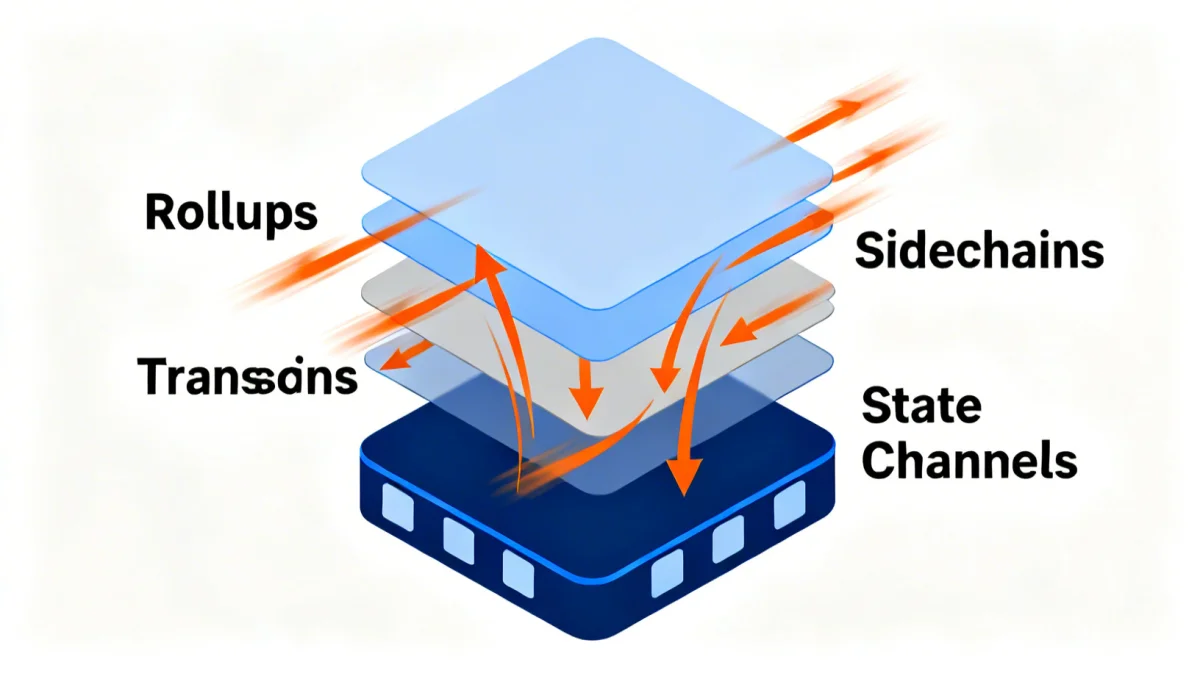
In essence, Layer 2 solutions operate on top of a Layer 1 blockchain, offloading much of the computational burden from the main chain. They process transactions separately and then periodically submit a summary or proof of these transactions back to the Layer 1 chain. This significantly increases transaction throughput and reduces costs, making the overall ecosystem more efficient and user-friendly. The beauty of this approach is that the security of the Layer 2 solution is still ultimately derived from the robust security guarantees of the Layer 1 blockchain.
Types of Layer 2 Altcoins and Their Mechanisms
The landscape of Layer 2 Altcoins is diverse, with various approaches to achieving scalability. Understanding these different mechanisms is key to evaluating their potential.
Anúncios
Rollups: Optimistic and ZK-Rollups
Rollups are currently one of the most popular and promising Layer 2 solutions. They ‘rollup’ hundreds of transactions off-chain into a single transaction that is then submitted to the Layer 1 blockchain. There are two primary types of rollups:
- Optimistic Rollups: These assume transactions are valid by default and only run computation if a challenge arises. This ‘optimistic’ approach allows for faster processing but introduces a withdrawal period (typically 7 days) during which transactions can be challenged. Examples include Arbitrum and Optimism.
- ZK-Rollups (Zero-Knowledge Rollups): These use cryptographic proofs (zero-knowledge proofs) to instantly verify the validity of off-chain transactions. While more computationally intensive to generate the proofs, they offer instant finality and stronger security guarantees, making them highly attractive for certain applications. Examples include zkSync and StarkNet.
Both types of rollups significantly reduce the data stored on the main blockchain, leading to higher throughput and lower fees. For US investors, projects building on these technologies represent direct exposure to the future of scalable blockchain infrastructure.
Sidechains
Sidechains are independent blockchains that run parallel to a main Layer 1 blockchain. They have their own consensus mechanisms and are connected to the main chain via a two-way peg, allowing assets to be moved between the two chains. While they offer high scalability and flexibility, their security is independent of the main chain, meaning they rely on their own validators. This can be a point of consideration for risk-averse investors. Polygon (MATIC) is a prominent example of a sidechain that has gained significant traction.
State Channels
State channels enable users to conduct multiple transactions off-chain without broadcasting each one to the main blockchain. Only the initial and final states of the channel are recorded on the Layer 1. This is particularly useful for applications requiring frequent, small transactions, such as gaming or micropayments. While highly efficient, state channels are often limited to interactions between a fixed set of participants. The Lightning Network for Bitcoin is a well-known example of a state channel implementation.
Plasma
Plasma is another framework for building scalable off-chain computations. Similar to sidechains, Plasma chains are child blockchains that periodically commit their state to the main chain. However, Plasma has had challenges with data availability and withdrawal mechanisms, leading to less widespread adoption compared to rollups. While less prevalent now, understanding its existence contributes to a holistic view of Layer 2 development.
Evaluating Investment Potential for US Portfolios
For US investors, the potential of Layer 2 Altcoins lies in their ability to solve critical infrastructure problems, thereby enabling the broader adoption and utility of decentralized technologies. As the underlying Layer 1 blockchains mature, the demand for efficient Layer 2 solutions will only intensify.
Key Factors for Evaluation
When considering an investment in Layer 2 Altcoins, several factors should be meticulously evaluated:
- Technology and Innovation: How novel and effective is the scaling solution? Does it truly address the pain points of the Layer 1 it’s built upon? Is it future-proof?
- Ecosystem Development: A thriving ecosystem of dApps, developers, and users is a strong indicator of a Layer 2’s long-term viability. Look for projects with significant developer activity and a growing number of deployed applications.
- Security Model: Understand how the Layer 2 solution derives its security. Does it inherit security from the Layer 1, or does it have its own independent security assumptions?
- Tokenomics: Analyze the token’s utility within its ecosystem. Does it have a clear purpose (e.g., governance, gas fees, staking)? Is the supply distribution fair and transparent?
- Team and Backers: A strong development team with a proven track record and reputable investors can instill confidence.
- Market Adoption and Traction: Look at metrics like Total Value Locked (TVL), daily active users, and transaction volume. These indicate real-world usage and demand.
- Regulatory Environment in the US: While not specific to Layer 2 tech, the broader regulatory landscape in the US for cryptocurrencies can significantly impact investment viability. Stay informed about SEC rulings and legislative developments.
Growth Catalysts for Layer 2 Altcoins in the Next 12 Months
Several catalysts could drive the growth and adoption of Layer 2 Altcoins over the next year:
- Continued Ethereum Upgrades: As Ethereum undergoes further upgrades (e.g., Proto-Danksharding for EIP-4844), its capacity for data availability for rollups will increase, making Layer 2s even more efficient and cost-effective.
- Increased Institutional Adoption: As institutions become more comfortable with decentralized finance (DeFi), the need for scalable and compliant infrastructure will push demand for robust Layer 2 solutions.
- Gaming and Metaverse Expansion: These sectors inherently require high transaction throughput and low latency, making Layer 2s indispensable for their continued growth.
- User Experience Improvements: Ongoing development will lead to more seamless bridging experiences, easier onboarding, and improved wallet integrations, reducing friction for end-users.
- Emergence of New Use Cases: As the technology matures, unforeseen applications and services will likely emerge, further solidifying the necessity of scalable Layer 2 infrastructure.
Prominent Layer 2 Altcoins to Watch
While this is not financial advice, here are some of the most prominent Layer 2 Altcoins that often appear in discussions about scalability and investment potential:
- Arbitrum (ARB): A leading optimistic rollup for Ethereum, known for its strong developer community and a wide array of dApps. Its recent token launch has generated significant interest.
- Optimism (OP): Another major optimistic rollup, Optimism has a strong commitment to public goods funding and a growing ecosystem. It’s a key player in the modular blockchain narrative.
- Polygon (MATIC): While known for its sidechain, Polygon is also actively developing ZK-rollup solutions (Polygon zkEVM), positioning itself as a comprehensive scaling platform for Ethereum.
- StarkNet (STRK): A ZK-rollup developed by StarkWare, focusing on scalability for general computation. It’s highly anticipated for its technological prowess and potential to onboard a vast number of users.
- zkSync (ZK): Another prominent ZK-rollup project by Matter Labs, aiming for mass adoption of Web3 through its secure and scalable solution.
It’s vital for US investors to conduct their own thorough research into each of these projects, considering their whitepapers, roadmaps, community engagement, and security audits.
Integrating Layer 2 Altcoins into a US Investment Portfolio
For US investors, incorporating Layer 2 Altcoins into a portfolio requires a strategic approach, akin to any other emerging asset class. Diversification, risk management, and a long-term perspective are paramount.
Portfolio Allocation Considerations
Given the inherent volatility and nascent nature of cryptocurrencies, a balanced allocation strategy is recommended. Consider:
- Risk Tolerance: Your personal risk tolerance should dictate the percentage of your portfolio allocated to high-growth, high-risk assets like altcoins.
- Diversification: Don’t put all your eggs in one basket. Spread your investment across several promising Layer 2 projects and other crypto sectors.
- Long-Term Vision: While short-term gains are possible, the true potential of Layer 2s often unfolds over a longer horizon as their ecosystems mature and adoption grows.
- Position Sizing: Invest amounts that you are comfortable losing, as the crypto market can be unpredictable.
Regulatory Landscape for US Investors
The regulatory environment in the US for cryptocurrencies is still evolving. Investors should be aware of:
- Tax Implications: Crypto gains are subject to capital gains tax. Accurate record-keeping of all transactions is essential. Consult with a tax professional specializing in crypto.
- SEC Scrutiny: The SEC has been actively involved in regulating the crypto space. While Layer 2 tokens are often tied to utility, their classification can still be a grey area. Stay informed about any regulatory announcements.
- Exchange Availability: Ensure that the Layer 2 Altcoins you are interested in are available on reputable exchanges accessible to US residents and comply with KYC/AML regulations.

Challenges and Risks Associated with Layer 2 Altcoins
While the prospects for Layer 2 Altcoins are bright, it’s crucial for US investors to be aware of the inherent challenges and risks:
- Technological Complexity: The underlying technology is complex and constantly evolving. Bugs, exploits, or unforeseen technical issues could arise.
- Competition: The Layer 2 space is highly competitive, with many projects vying for market share. Not all will succeed.
- Liquidity Risks: Smaller Layer 2 tokens might have lower liquidity, making it difficult to enter or exit positions quickly without impacting the price.
- Bridging Risks: Moving assets between Layer 1 and Layer 2 solutions involves ‘bridges,’ which can be points of vulnerability if not meticulously secured.
- Centralization Concerns: Some Layer 2 solutions, especially in their early stages, might exhibit degrees of centralization, which could pose risks to their long-term decentralization goals.
- Market Volatility: The broader crypto market is notoriously volatile, and Layer 2 Altcoins are not immune to these price swings.
The Future of Scalability and Layer 2 Altcoins
The trajectory of blockchain technology points towards a modular future, where Layer 1s provide a secure base layer, and Layer 2s handle execution and scalability. This division of labor is essential for onboarding billions of users and supporting a truly decentralized global economy. Layer 2 Altcoins are not just temporary fixes; they are integral components of this future architecture.
As the demand for fast, cheap, and secure transactions continues to grow, the innovation in the Layer 2 space will only accelerate. We can expect to see further advancements in ZK-rollup technology, new forms of interoperability between different Layer 2s, and increasing specialization of Layer 2s for specific use cases (e.g., gaming, DeFi, NFTs).
For US investors, staying abreast of these developments is key. The projects that successfully navigate technological hurdles, build robust ecosystems, and adapt to regulatory landscapes are likely to be the ones that deliver significant returns. The next 12 months will be critical in shaping the competitive landscape of Layer 2 solutions, and early identification of promising projects could yield substantial benefits.
Conclusion
Layer 2 Altcoins represent a pivotal development in the blockchain space, offering crucial scalability solutions that are vital for the widespread adoption of decentralized technologies. For US investors, these altcoins present a compelling investment opportunity, allowing them to participate in the growth of next-generation blockchain infrastructure.
However, like all investments in the crypto market, they come with risks. A diligent approach involving thorough research, understanding the underlying technology, evaluating ecosystem strength, and adhering to sound portfolio management principles is essential. By carefully analyzing the various types of Layer 2 solutions and the factors influencing their growth, US investors can strategically position their portfolios to potentially benefit from the ongoing evolution and expansion of the blockchain ecosystem over the next 12 months and beyond.
The journey into Layer 2 Altcoins is one of innovation and potential. With informed decisions and a clear understanding of the market dynamics, US investors can unlock significant value in this exciting and rapidly developing sector of the cryptocurrency world.