NFT Art Authentication: Top 4 Blockchain Protocols for US Collectors
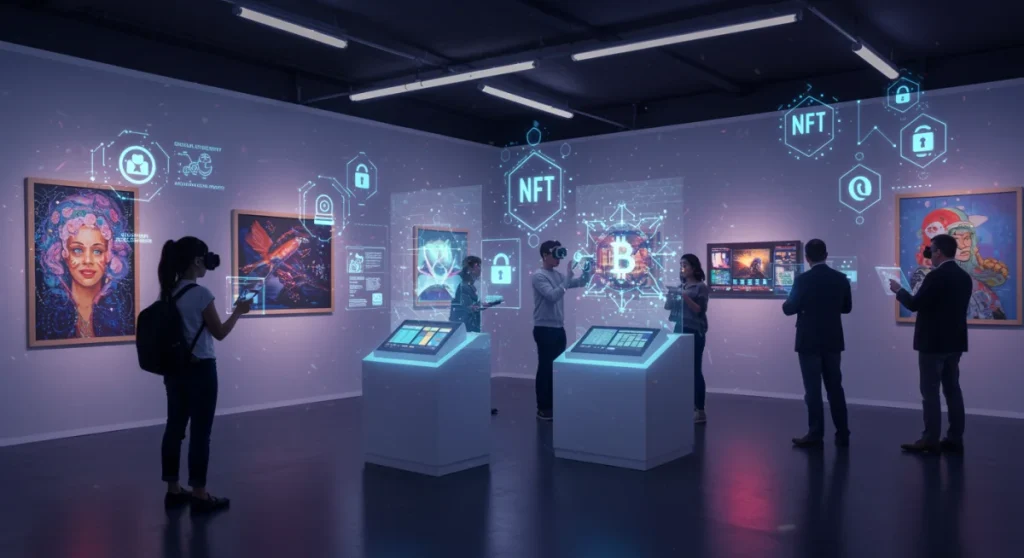
Understanding the evolving landscape of NFT Art Authentication Protocols is crucial for US collectors, as it ensures the verifiable ownership and immutable provenance of their digital art assets in an increasingly complex market.
The world of digital art has undergone a dramatic transformation with the advent of Non-Fungible Tokens (NFTs). For US collectors, the ability to confidently authenticate the originality and ownership of these digital assets is paramount. This article delves into the leading NFT Art Authentication Protocols set to dominate the landscape in 2026, offering practical solutions and a comprehensive comparison to guide your collecting journey.
The Imperative of NFT Art Authentication
In the burgeoning digital art market, the concept of authenticity is both foundational and complex. Unlike physical artworks with established provenance records and expert appraisals, digital art, by its very nature, can be endlessly replicated. This is where NFT technology steps in, providing a cryptographic certificate of ownership and a record of creation on a blockchain.
However, the underlying blockchain protocol plays a critical role in the robustness and reliability of this authentication. Collectors need to understand how different protocols handle data storage, immutability, security, and interoperability to make informed decisions. The choice of protocol directly impacts the long-term value and verifiability of a digital artwork.
Why Authentication Matters for Digital Art
Authentication in the NFT space goes beyond just proving who owns a token. It confirms the unique digital fingerprint of the artwork, its creator, and its transaction history. Without strong authentication, the entire premise of collecting unique digital assets falters, leading to potential fraud and devaluation.
- Ensuring Ownership: Verifying that the buyer legitimately owns the specific token linked to an artwork.
- Confirming Provenance: Tracing the complete history of the NFT from its creation to its current owner.
- Combating Forgery: Differentiating genuine, creator-minted NFTs from unauthorized copies or scams.
- Protecting Investment: Safeguarding the financial value of digital art assets against fraudulent claims.
Ultimately, a robust authentication framework built upon reliable blockchain protocols is not merely a technical detail; it is the bedrock of trust and confidence for US collectors navigating the intricate and often speculative world of NFT art.
Ethereum: The Pioneer and Its Evolving Role
Ethereum remains the undisputed pioneer in the NFT space, having hosted the vast majority of early and significant NFT collections. Its robust ecosystem, extensive developer community, and battle-tested security make it a primary choice for many artists and collectors. The ERC-721 and ERC-1155 token standards are the foundational elements for NFT creation on Ethereum, providing a standardized framework for digital asset representation.
Despite its dominance, Ethereum faces challenges, primarily related to scalability and transaction costs, often referred to as ‘gas fees.’ However, the ongoing transition to Ethereum 2.0 (now known as the Merge and subsequent upgrades) aims to address these issues, promising a more efficient and sustainable network. This evolution is crucial for maintaining its leading position in NFT Art Authentication Protocols.
Ethereum’s Strengths in NFT Authentication
The network’s decentralization and security are paramount for authentication. Every transaction and token creation is recorded on a distributed ledger, making it nearly impossible to alter or falsify records. This immutability is key to proving the authenticity and tracing the provenance of an NFT.
- Established Standards: ERC-721 and ERC-1155 are widely adopted, ensuring broad compatibility.
- Decentralization: Thousands of nodes secure the network, preventing single points of failure.
- Security: Proven cryptographic security makes tampering with records extremely difficult.
- Tooling and Infrastructure: A vast array of tools, wallets, and marketplaces support Ethereum NFTs.
For US collectors, Ethereum offers a high degree of confidence in the long-term verifiability of their art. While gas fees can be a barrier for some, the prestige and established nature of the network often justify the cost for high-value art pieces. The upcoming upgrades are expected to further solidify its position, making authentication more accessible and efficient.
Flow: Designed for Digital Collectibles
Flow emerged as a blockchain specifically engineered for consumer-facing decentralized applications, including digital collectibles and games. Developed by Dapper Labs, the creators of CryptoKitties and NBA Top Shot, Flow addresses many of the scalability and user experience issues that plague general-purpose blockchains like Ethereum. Its multi-node architecture allows for parallel transaction processing, leading to higher throughput and lower fees.
For NFT Art Authentication Protocols, Flow offers a compelling alternative, especially for projects requiring frequent micro-transactions or large-scale minting. Its Cadence programming language is designed to be developer-friendly, encouraging easier smart contract development and deployment for artists and platforms.
Flow’s Unique Approach to Scalability
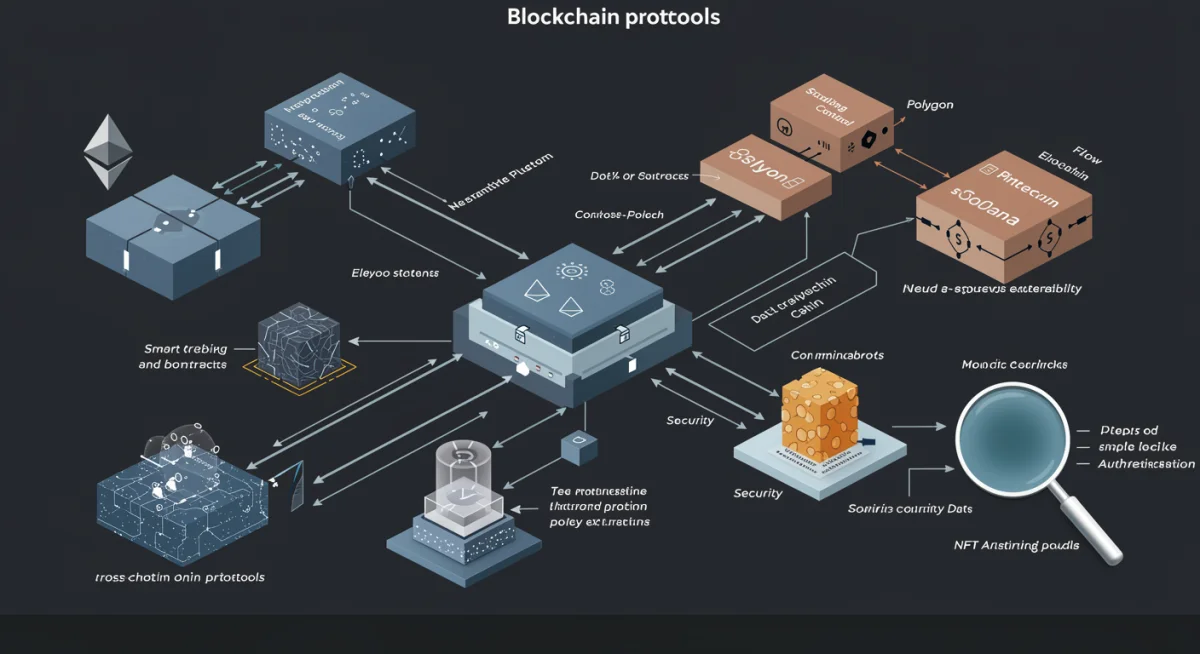
Flow’s innovative architecture separates the tasks performed by nodes into different roles: Collector, Executor, Consensus, and Verification. This specialization allows for a massive increase in transaction capacity without sharding, which can complicate development and security on other chains. This design choice directly benefits NFT authentication by ensuring fast, reliable, and cost-effective record-keeping.
The platform’s focus on user experience also extends to its authentication process. Collectors can often view detailed provenance information directly within Flow-powered marketplaces, simplifying the verification steps. This integrated approach makes it an attractive option for artists and platforms aiming for broad adoption and ease of use.
- Specialized Architecture: High throughput and low transaction costs ideal for mass adoption.
- User-Friendly: Designed with consumer applications in mind, simplifying the user experience.
- Cadence Language: Allows for safer and easier smart contract development.
- Eco-Friendly: More energy-efficient than proof-of-work chains due to its consensus mechanism.
Flow’s dedicated design for digital collectibles positions it strongly for the future of NFT art authentication, particularly for projects that prioritize scalability, affordability, and a seamless user experience for US collectors.
Polygon: Scaling Ethereum for Accessibility
Polygon (formerly Matic Network) is a Layer 2 scaling solution built on top of Ethereum. It aims to improve Ethereum’s scalability and usability without sacrificing its security or decentralization. By offering various scaling solutions, including sidechains, Polygon provides a faster and cheaper environment for NFT transactions and minting, while still benefiting from Ethereum’s underlying security. This makes it an increasingly popular choice for artists and platforms looking to bypass high gas fees on the mainnet.
For NFT Art Authentication Protocols, Polygon offers an attractive middle ground. It allows for the creation and authentication of NFTs with significantly reduced costs and faster transaction times compared to Ethereum’s mainnet, while still maintaining a strong connection to the most established NFT ecosystem. This hybrid approach is particularly beneficial for emerging artists and collectors who are price-sensitive.
How Polygon Enhances NFT Authentication
Polygon’s sidechain, the Polygon PoS chain, runs parallel to Ethereum and is compatible with the Ethereum Virtual Machine (EVM). This compatibility means that existing Ethereum dApps and NFT projects can easily migrate or extend their functionality to Polygon. For authentication, this translates to the ability to verify NFTs with the same cryptographic standards as Ethereum, but with a much smoother user experience.
The lower fees and faster confirmation times on Polygon make it more practical for issuing multiple editions of artworks or for artists who frequently mint new pieces. This accessibility fosters a more vibrant and diverse NFT art market, where authentication remains robust despite the increased activity.
- Ethereum Compatibility: Benefits from Ethereum’s security and developer tools.
- Lower Transaction Costs: Significantly reduces gas fees for minting and trading NFTs.
- Faster Transactions: Processes transactions much quicker than Ethereum mainnet.
- Growing Ecosystem: A rapidly expanding network of dApps, marketplaces, and users.
Polygon’s role as a scaling solution ensures that Ethereum’s strong authentication capabilities become more accessible and efficient for a wider audience of US collectors and artists, bolstering the overall integrity of the NFT art market.
Solana: High Performance for Digital Art
Solana has rapidly risen as a prominent blockchain platform, known for its exceptional transaction speed and low costs. Its innovative consensus mechanism, Proof-of-History (PoH) combined with Proof-of-Stake (PoS), allows it to process tens of thousands of transactions per second. This high performance makes Solana an attractive option for NFT projects that require rapid minting, frequent trading, and a highly responsive user experience.
As an NFT Art Authentication Protocol, Solana provides a compelling alternative to Ethereum and its Layer 2 solutions, particularly for artists and collectors who prioritize speed and affordability above all else. Its growing ecosystem includes dedicated NFT marketplaces and infrastructure, fostering a vibrant community around digital art.
Solana’s Advantages in NFT Provenance
The speed and efficiency of Solana’s network mean that NFT transactions, including minting and transfers, are recorded almost instantaneously and at a fraction of the cost seen on other networks. This efficiency is crucial for maintaining clear and up-to-date provenance records, allowing collectors to quickly verify the history of their digital assets.
While newer than Ethereum, Solana’s robust developer community is continuously building tools and standards that enhance NFT authentication. The platform’s commitment to decentralization and cryptographic security ensures that despite its speed, the integrity of the art’s verifiable history remains intact.
- Unparalleled Speed: Processes transactions at extremely high speeds.
- Low Transaction Fees: Significantly cheaper to mint and trade NFTs.
- Growing NFT Ecosystem: Dedicated marketplaces and infrastructure for digital art.
- Scalability: Designed for high throughput and future growth without sacrificing performance.
Solana’s focus on high performance and cost-efficiency positions it as a strong contender for NFT art authentication, offering US collectors a powerful and accessible platform for managing their digital art portfolios with confidence.
Comparative Analysis for US Collectors in 2026
Choosing the right blockchain protocol for NFT art authentication in 2026 involves weighing various factors, including security, cost, speed, and ecosystem maturity. Each of the four leading protocols—Ethereum, Flow, Polygon, and Solana—offers distinct advantages and caters to different needs within the US collector market. Understanding these differences is crucial for making informed decisions about where to mint, buy, and hold digital art.
For high-value, blue-chip NFT art, Ethereum’s established security and decentralization often remain the preferred choice, despite higher fees. However, for emerging artists, generative art, or projects requiring significant on-chain interaction, the scalability and lower costs of Flow, Polygon, or Solana become highly attractive. The landscape is not about a single winner, but rather a diverse ecosystem catering to varied artistic and collecting strategies.
Key Factors for Protocol Selection
US collectors should consider several key metrics when evaluating NFT Art Authentication Protocols. These include the underlying technology, the community supporting the protocol, the cost of transactions, and the overall security framework. Each of these elements contributes to the long-term viability and trustworthiness of an NFT’s authentication.
- Security & Decentralization: How robust is the network against attacks and censorship?
- Transaction Costs: What are the typical fees for minting, buying, and selling NFTs?
- Transaction Speed: How quickly are transactions confirmed on the network?
- Ecosystem Maturity: The breadth of marketplaces, wallets, and dApps available.
- Environmental Impact: The energy consumption associated with the protocol.
Ultimately, the best protocol is often dictated by the specific artwork, its intended market, and the collector’s priorities. A diverse portfolio might even include NFTs across multiple protocols, leveraging the unique strengths of each for optimal authentication and value preservation.
Practical Solutions and Future Outlook
For US collectors, navigating the evolving world of NFT art authentication requires a proactive approach. Practical solutions involve leveraging specialized tools, understanding cross-chain capabilities, and staying informed about protocol developments. As the NFT market matures, we can expect further standardization and improved interoperability, making authentication even more seamless.
The future of NFT Art Authentication Protocols will likely see increased adoption of Layer 2 solutions, sidechains, and potentially new, highly specialized blockchains. The emphasis will remain on providing robust, immutable provenance records while simultaneously minimizing costs and maximizing user experience. Cross-chain bridges and aggregators will also play a significant role in unifying the fragmented NFT landscape, offering a more holistic view of digital art ownership.
Emerging Trends in Authentication
Beyond the core blockchain protocols, several emerging trends will shape NFT authentication. These include enhanced metadata standards, decentralized identity solutions, and even physical-digital hybrid authentication methods. These innovations aim to provide even greater certainty and trust in the authenticity of digital art.
- Metadata Standardization: Ensuring consistent and verifiable data linked to the NFT.
- Decentralized Identifiers (DIDs): Providing self-sovereign identity for artists and collectors.
- Physical-Digital Integration: Linking physical artworks to NFTs for enhanced provenance.
- AI-Powered Verification: Using AI to analyze artwork characteristics and detect potential fakes.
The continuous innovation in blockchain technology and supporting infrastructure will only strengthen the ability of US collectors to authenticate their NFT art. Staying updated on these advancements will be crucial for securing valuable digital assets in 2026 and beyond.
| Key Aspect | Description for NFT Art Authentication |
|---|---|
| Ethereum (Mainnet) | High security, decentralization, and established ecosystem; ideal for high-value art, but with higher fees. |
| Flow | Designed for collectibles, offering high scalability, low fees, and user-friendly experience for mass adoption. |
| Polygon | Ethereum Layer 2 solution providing lower costs and faster transactions while leveraging Ethereum’s security. |
| Solana | Ultra-fast and low-cost transactions, suitable for high-volume minting and dynamic NFT projects. |
Frequently Asked Questions About NFT Art Authentication
Blockchain provides an immutable, transparent, and decentralized ledger that permanently records the creation, ownership, and transaction history of an NFT. This cryptographic record makes it nearly impossible to alter or forge, thereby ensuring the authenticity and verifiable provenance of digital art.
Challenges include distinguishing between original creator-minted NFTs and unauthorized copies, verifying the identity of the artist, managing off-chain metadata storage, and navigating the complexities of different blockchain protocols. Market education and robust platform tools are crucial to overcome these hurdles.
High gas fees on Ethereum can make minting and transferring NFTs expensive, potentially deterring artists and collectors from engaging with the network. While not directly affecting authentication’s integrity, they influence accessibility and the economic viability of certain NFT art projects, pushing users towards Layer 2 solutions.
Authenticating NFTs across different protocols is becoming possible through cross-chain bridges and interoperability solutions. While native authentication is tied to its originating chain, these technologies allow for assets to be moved or recognized on other networks, enhancing liquidity and broader verifiability.
NFT marketplaces are crucial intermediaries. They often provide tools and interfaces for viewing an NFT’s provenance, linking to the blockchain record, and sometimes implementing their own verification processes. Reputable marketplaces enhance trust by curating collections and flagging suspicious assets, aiding collectors in authentication.
Conclusion
The landscape of NFT Art Authentication Protocols for US collectors in 2026 is dynamic and increasingly sophisticated. While Ethereum continues to set the standard for security and decentralization, emerging protocols like Flow, Polygon, and Solana offer compelling advantages in terms of scalability, speed, and cost-efficiency. Each protocol presents a unique set of benefits, catering to different segments of the digital art market. As the industry evolves, a comprehensive understanding of these underlying technologies will empower collectors to make informed decisions, ensuring the authenticity and long-term value of their digital art investments. The future promises enhanced interoperability and innovative solutions, further solidifying the trust and integrity within the vibrant world of NFT art.