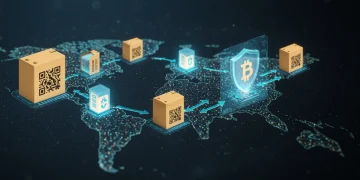
Securing Supply Chain Blockchains: US Business Tampering Risks Reduced

Implementing robust cryptographic protocols, immutable ledger technologies, and stringent access controls are essential best practices for securing supply chain blockchains, aiming to reduce tampering risks for US businesses by 25% by 2026.
The integrity of global commerce hinges on transparent and secure supply chains. For US businesses, adopting best practices for securing supply chain blockchains is not just an advantage, but a necessity to reduce tampering risks by an ambitious 25% by 2026. This move promises enhanced trust, efficiency, and resilience in an increasingly complex and interconnected world.
Understanding the Vulnerabilities in Traditional Supply Chains
Traditional supply chains, while functional, are often plagued by inherent vulnerabilities that make them susceptible to tampering, fraud, and inefficiencies. The reliance on centralized databases and manual record-keeping creates single points of failure, making it easier for malicious actors to compromise data or products without immediate detection. This antiquated structure also leads to a lack of transparency, making it difficult to trace goods effectively and verify their authenticity at every stage.
The opaque nature of these systems means that information can be selectively shared or even falsified, leading to disputes, delays, and significant financial losses. Furthermore, the absence of a unified, immutable record across all participants often results in reconciliation challenges and a general lack of trust among partners. These systemic weaknesses highlight the urgent need for a more robust and secure framework.
Centralized Data Risks
One of the primary weaknesses of traditional supply chains stems from their centralized data storage. When all critical information resides in a single location or is managed by a few entities, it becomes a prime target for cyberattacks. A breach in such a system can have catastrophic consequences, leading to data theft, operational disruptions, and severe reputational damage. The lack of distributed control also exacerbates the impact of a successful attack.
- Single point of failure for data integrity
- Increased risk of unauthorized access and data manipulation
- Difficulty in recovering compromised information
Lack of Transparency and Traceability
Another significant vulnerability is the limited visibility within traditional supply chains. It is often challenging to track a product’s journey from its origin to the end-consumer with complete accuracy and transparency. This lack of traceability makes it difficult to pinpoint the source of contamination, counterfeit goods, or unethical practices, putting consumers and businesses at risk. The fragmented nature of data across different participants further complicates any investigative efforts.
The inherent design of these systems, which often involves multiple intermediaries, each with their own record-keeping methods, creates a complex web where information can be lost, altered, or simply not shared. This opacity undermines efforts to ensure product quality, ethical sourcing, and regulatory compliance, making the entire chain less trustworthy and more susceptible to various forms of fraud. Addressing these fundamental issues is crucial for any meaningful advancement in supply chain security and efficiency.
The Transformative Power of Blockchain in Supply Chain Security
Blockchain technology offers a paradigm shift in how supply chains can be secured and managed. By providing a decentralized, immutable, and transparent ledger, blockchain addresses many of the core vulnerabilities found in traditional systems. Every transaction, movement, and change in status is recorded on the blockchain as a block, cryptographically linked to the previous one, creating an unbroken chain of verifiable information. This inherent immutability makes it incredibly difficult for data to be tampered with or altered without detection.
The distributed nature of blockchain means that no single entity controls the entire ledger; instead, multiple participants maintain copies, ensuring resilience against attacks and enhancing trust among stakeholders. This shared, secure record allows for real-time visibility into the entire supply chain, from raw materials to finished products, providing unprecedented levels of traceability and accountability. This transparency fosters greater collaboration and reduces the potential for disputes.
Immutable Ledger for Enhanced Trust
The immutability of blockchain is perhaps its most compelling feature for supply chain security. Once data is recorded on the blockchain, it cannot be changed or deleted, creating a permanent and verifiable audit trail. This feature is crucial for maintaining the integrity of product information, proving authenticity, and ensuring compliance with regulatory standards. It virtually eliminates the possibility of retrospective data tampering.
- Permanent and verifiable record of all transactions
- Eliminates the risk of data alteration post-recording
- Builds inherent trust among all supply chain participants
Decentralization and Resilience
Decentralization is another cornerstone of blockchain’s power. Unlike centralized databases, blockchain networks are distributed across numerous nodes, meaning there is no single point of failure. If one node goes offline or is compromised, the network continues to operate seamlessly, thanks to the collective validation and storage of data by other participants. This distributed architecture significantly enhances the resilience and security of the supply chain.
Furthermore, the consensus mechanisms employed by blockchains, such as Proof of Work or Proof of Stake, require agreement from multiple parties before a new block can be added. This collective validation process further fortifies the network against malicious activities, ensuring that only legitimate transactions are recorded. The combination of immutability and decentralization makes blockchain a robust solution for securing complex supply chains against a wide array of threats, paving the way for a more secure and efficient global trade ecosystem.
Key Best Practices for Implementing Blockchain Security
Implementing blockchain in supply chains requires careful planning and adherence to specific best practices to maximize its security benefits. It’s not enough to simply adopt the technology; organizations must strategically integrate it to address their unique vulnerabilities and operational needs. A foundational step involves selecting the right blockchain platform, considering factors such as scalability, privacy features, and consensus mechanisms, which directly impact the network’s overall security and performance.
Establishing clear governance models and defining participant roles are also critical. Every entity involved in the blockchain network must understand their responsibilities and the protocols for data entry and validation. This structured approach helps prevent unauthorized access and maintains the integrity of the shared ledger. Continuous monitoring and auditing of the blockchain network are equally important to detect and respond to potential threats proactively, ensuring ongoing security.
Robust Cryptographic Protocols
At the heart of blockchain security lies cryptography. Utilizing strong, industry-standard cryptographic algorithms is paramount for encrypting data, verifying identities, and ensuring the integrity of transactions. This includes secure hashing functions, digital signatures, and encryption keys that protect sensitive information from unauthorized viewing or modification. Regular updates to these protocols are essential to stay ahead of evolving cyber threats.
- Employing SHA-256 or similar secure hashing algorithms
- Implementing digital signatures for transaction authentication
- Ensuring secure key management practices
Smart Contract Security Audits
Smart contracts automate agreements and transactions on the blockchain, but their code can contain vulnerabilities if not properly designed and audited. Regular and thorough security audits of all smart contracts are crucial to identify and rectify any bugs, logical flaws, or potential attack vectors before deployment. This proactive approach minimizes the risk of exploitation and ensures the reliable execution of contractual terms.
Engaging independent third-party auditors specializing in smart contract security can provide an unbiased assessment and uncover hidden weaknesses. Furthermore, adopting formal verification methods can mathematically prove the correctness of smart contract code, significantly enhancing their trustworthiness and robustness. The security of smart contracts directly impacts the overall integrity and reliability of the blockchain-based supply chain, making these audits an indispensable best practice.
Data Privacy and Confidentiality in Blockchain Supply Chains
While transparency is a core advantage of blockchain, ensuring data privacy and confidentiality remains a critical concern, especially for sensitive business information in supply chains. Not all data needs to be publicly visible, and certain information must be protected to maintain competitive advantage and comply with regulations like GDPR or CCPA. Striking the right balance between transparency and privacy is essential for successful blockchain adoption.
Advanced cryptographic techniques and architectural choices play a significant role in achieving this balance. Implementing private or permissioned blockchains allows businesses to control who can access specific data, while zero-knowledge proofs and homomorphic encryption can enable data verification without revealing the underlying information. These technologies are vital for building trust and encouraging participation from all stakeholders.
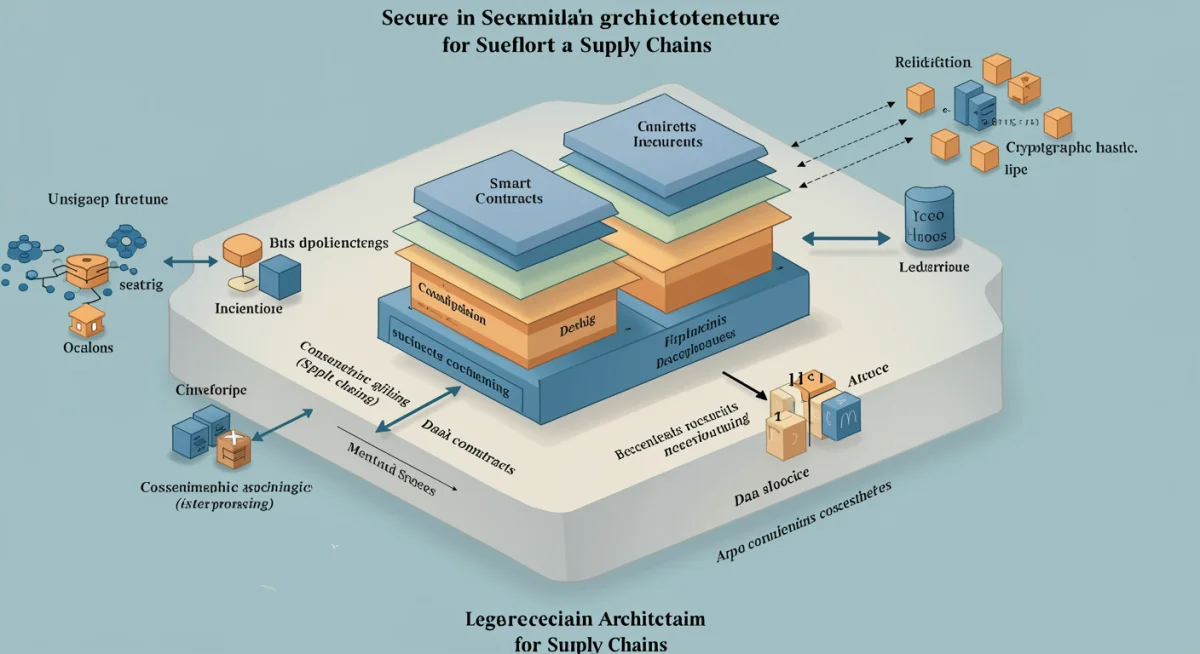
Permissioned Blockchains for Controlled Access
Unlike public blockchains, permissioned blockchains restrict participation to known and authorized entities. This model is particularly well-suited for supply chains where businesses need to share information only with trusted partners, suppliers, and regulators. It allows for granular control over data access, ensuring that sensitive commercial data remains confidential while maintaining the benefits of immutability and decentralization.
- Restricted access to authorized participants only
- Enhanced control over data visibility and sharing
- Compliance with industry-specific privacy regulations
Zero-Knowledge Proofs (ZKPs)
Zero-Knowledge Proofs (ZKPs) are a powerful cryptographic tool that allows one party to prove the truth of a statement to another party, without revealing any information beyond the validity of the statement itself. In a supply chain context, ZKPs can be used to verify compliance with certain standards or the authenticity of a product, without exposing proprietary details about manufacturing processes or ingredient sourcing. This capability is invaluable for maintaining confidentiality while still enabling verification.
For instance, a supplier could prove that a product meets specific organic certification requirements without disclosing the names of their farms or production methods. This preserves competitive secrets while still providing verifiable assurance to downstream partners. The integration of ZKPs is a sophisticated yet effective way to reconcile the need for transparency with the imperative for privacy in secure supply chain blockchains, making them a key component in advanced security strategies for US businesses.
Regulatory Compliance and Governance in US Supply Chains
Navigating the complex landscape of regulatory compliance is a critical aspect of securing blockchain-based supply chains, particularly for US businesses. The evolving nature of blockchain technology means that legal frameworks are still catching up, creating both opportunities and challenges. Adhering to existing regulations, such as those related to data privacy (e.g., CCPA), trade compliance, and industry-specific standards, is paramount to avoid legal repercussions and build stakeholder trust.
Establishing clear governance structures within the blockchain consortium is equally important. This includes defining roles, responsibilities, and decision-making processes for all participants. A well-defined governance model ensures that disputes can be resolved efficiently, updates to the network are managed systematically, and the overall integrity of the system is maintained in accordance with legal and ethical guidelines. Proactive engagement with legal experts and regulatory bodies is highly advisable.
Adherence to Data Protection Regulations
US businesses must ensure their blockchain implementations comply with all relevant data protection laws. This often involves careful consideration of how personal data is stored, processed, and accessed on the blockchain. While blockchain offers immutability, designing the system to handle personal data in a way that allows for rights like the ‘right to erasure’ (where applicable, potentially through off-chain storage or cryptographic solutions) is crucial. Non-compliance can lead to significant fines and loss of consumer trust.
- Compliance with CCPA and other state-specific privacy laws
- Implementing privacy-by-design principles in blockchain architecture
- Ensuring mechanisms for data access and deletion where legally required
Establishing Consortium Governance Models
For a permissioned blockchain network involving multiple enterprises, a robust governance model is essential. This model dictates how new participants are onboarded, how network upgrades are approved, and how disputes are resolved. Clear rules and a transparent decision-making process are vital for maintaining the stability and fairness of the blockchain ecosystem. Without effective governance, the benefits of shared ledger technology can be undermined by internal conflicts or lack of direction.
The governance framework should also address legal liability, intellectual property rights, and data ownership within the consortium. Regular meetings and formalized agreements among all members help to ensure alignment and collective responsibility for the network’s security and operational success. A well-structured governance model is a cornerstone for the long-term viability and security of any multi-party blockchain supply chain, proving instrumental in reducing tampering risks by fostering a collaborative and accountable environment.
Future Trends and Innovations in Supply Chain Blockchain Security
The landscape of supply chain blockchain security is continuously evolving, with new technologies and innovations emerging that promise to further enhance resilience against tampering and fraud. Staying abreast of these trends is crucial for US businesses aiming to maintain a competitive edge and achieve the ambitious goal of reducing tampering risks by 25% by 2026. These advancements are not just incremental improvements but often represent fundamental shifts in how security is approached.
One significant area of development is the integration of Artificial Intelligence (AI) and Machine Learning (ML) with blockchain. AI/ML can be used to analyze blockchain data for anomalies, predict potential attack vectors, and automate threat responses, adding an intelligent layer of defense. Another trend involves the convergence of blockchain with IoT devices, creating more granular and real-time tracking capabilities that are inherently secure, thereby minimizing human error and intervention points.
AI and Machine Learning for Anomaly Detection
Integrating AI and Machine Learning into blockchain supply chains offers powerful capabilities for real-time anomaly detection. These intelligent systems can analyze vast amounts of data recorded on the blockchain, identifying unusual patterns or deviations that might indicate fraudulent activity or tampering attempts. By learning from historical data, AI algorithms can predict and flag suspicious transactions or events with high accuracy, enabling rapid response.
- Real-time monitoring for unusual transaction patterns
- Predictive analytics to identify potential security breaches
- Automated alerts and responses to detected anomalies
Quantum-Resistant Cryptography
As quantum computing advances, the threat it poses to current cryptographic standards becomes more pronounced. Future-proofing blockchain security involves researching and implementing quantum-resistant cryptography. These new cryptographic algorithms are designed to withstand attacks from quantum computers, ensuring the long-term confidentiality and integrity of data stored on the blockchain. Adopting these measures early is a proactive step against a looming security challenge.
The development and standardization of quantum-resistant algorithms are ongoing, but businesses should begin exploring their integration into existing blockchain architectures. This involves updating cryptographic libraries and potentially re-evaluating the underlying security primitives. By embracing quantum-resistant cryptography, US businesses can ensure their supply chain blockchains remain secure against even the most advanced future threats, safeguarding their operations and investments for decades to come.
Challenges and Mitigation Strategies for US Businesses
While the benefits of securing supply chain blockchains are substantial, US businesses face several challenges in their implementation journey. These challenges range from technical complexities and interoperability issues to the significant initial investment required and the need for comprehensive stakeholder buy-in. Addressing these hurdles effectively is crucial for realizing the full potential of blockchain technology and achieving the targeted reduction in tampering risks.
A primary concern is the scalability of blockchain networks, especially as transaction volumes increase across vast supply chains. Mitigation strategies involve choosing scalable blockchain platforms and exploring layer-2 solutions. Another key challenge is achieving interoperability between different blockchain networks and legacy systems, which often requires robust API development and standardization efforts. Overcoming these obstacles demands a strategic, phased approach, coupled with strong leadership and cross-organizational collaboration.
Addressing Scalability and Interoperability
Scalability remains a significant challenge for many blockchain applications, particularly in large-scale supply chains with high transaction throughput. Ensuring the network can handle a growing volume of transactions without compromising speed or cost is paramount. Similarly, interoperability – the ability for different blockchain networks and existing enterprise systems to communicate and exchange data seamlessly – is critical for a truly integrated supply chain solution. Without it, data silos can re-emerge, diminishing the benefits of decentralization.
- Implementing sharding or sidechains for increased transaction capacity
- Developing standardized APIs for seamless system integration
- Participating in cross-chain interoperability initiatives
Managing Cost and Gaining Stakeholder Buy-in
The initial investment in blockchain technology, including development, infrastructure, and training, can be substantial. Businesses must conduct thorough cost-benefit analyses and demonstrate a clear return on investment to justify these expenditures. Equally important is gaining buy-in from all stakeholders, including suppliers, logistics providers, and end-consumers. Resistance to change, lack of understanding, and concerns about new processes can hinder adoption.
Mitigation strategies include starting with pilot projects to showcase tangible benefits, providing comprehensive training and education, and involving stakeholders in the design and implementation process. Clear communication about the long-term advantages, such as reduced fraud, improved efficiency, and enhanced trust, can help overcome skepticism. By proactively addressing concerns about cost and fostering a collaborative environment, US businesses can successfully navigate these challenges and accelerate the adoption of secure supply chain blockchains, moving closer to their goal of significantly reducing tampering risks.
| Key Practice | Brief Description |
|---|---|
| Immutable Ledger | Ensures all records are permanent and tamper-proof, enhancing data integrity and trust. |
| Strong Cryptography | Utilizes advanced encryption and digital signatures to secure data and transactions. |
| Smart Contract Audits | Regularly reviews and verifies smart contract code to prevent vulnerabilities and exploits. |
| Permissioned Access | Controls who can view and interact with data, balancing transparency with necessary privacy. |
Frequently Asked Questions About Blockchain Supply Chain Security
The primary benefit is enhanced transparency and immutability. Blockchain creates a tamper-proof record of every transaction and movement, making it nearly impossible to alter data without detection, significantly boosting trust and accountability across the entire supply chain network.
Blockchain reduces tampering risks by decentralizing data storage and using cryptographic hashing. This ensures that records are distributed and linked, making any unauthorized changes immediately visible to all network participants, thus deterring fraudulent activities effectively.
For supply chains, permissioned (private) blockchains often offer better control over access and data privacy, which can be crucial for sensitive commercial information. While public blockchains offer high decentralization, permissioned ones allow businesses to manage participant identities and data visibility more effectively.
Smart contracts automate and enforce agreements without intermediaries, thereby reducing human error and potential for fraud. They execute predefined actions when conditions are met, ensuring efficiency and reliability in supply chain processes, from payments to inventory management.
Key challenges include scalability issues, interoperability with legacy systems, high initial implementation costs, and the need for significant stakeholder buy-in. Overcoming these requires strategic planning, robust technical solutions, and effective change management across all partners.
Conclusion
The journey towards a more secure and transparent global supply chain is undeniably anchored in the strategic adoption of blockchain technology. For US businesses, embracing best practices for securing supply chain blockchains is not merely an option but a critical imperative to significantly reduce tampering risks by 25% by 2026. This ambitious goal is achievable through a concerted effort in implementing robust cryptographic protocols, ensuring smart contract integrity, balancing transparency with data privacy, and establishing clear governance models. While challenges like scalability and interoperability persist, proactive mitigation strategies and continuous innovation, particularly with AI and quantum-resistant cryptography, will pave the way for resilient and trustworthy supply chains. The future of commerce demands nothing less than this level of security and accountability.