Protecting US Blockchain Networks from Quantum Attacks

The evolving threat of quantum computing necessitates immediate and concerted efforts to protect US blockchain networks from quantum computing attacks in the next 3 years, demanding advanced cryptographic solutions and robust security protocols for national digital infrastructure.
The digital age has brought unprecedented innovation, with blockchain technology standing as a cornerstone of modern financial and data systems. However, a looming shadow, the advent of quantum computing, threatens to redefine the very fabric of our secure digital interactions. The imperative to protect US blockchain networks from quantum computing attacks in the next 3 years is not merely a technical challenge but a national security priority. Understanding this new threat landscape, its implications, and the proactive measures required is critical for safeguarding the integrity and resilience of the United States’ digital infrastructure. This article delves into the complexities of quantum threats, explores the vulnerabilities of current blockchain systems, and outlines a strategic roadmap for defense.
The Imminent Quantum Threat to Blockchain Cryptography
Quantum computing, with its immense processing power, promises to revolutionize various fields, from medicine to artificial intelligence. Yet, this same power poses a severe existential threat to the cryptographic algorithms that underpin virtually all modern digital security, including blockchain technology. The current cryptographic standards, particularly those used in public-key cryptography, are susceptible to attacks from sufficiently advanced quantum computers.
The primary concern lies with algorithms like Shor’s algorithm, which can efficiently break the elliptic curve cryptography (ECC) and Rivest-Shamir-Adleman (RSA) algorithms commonly used for securing blockchain transactions and digital signatures. While a fault-tolerant quantum computer capable of such attacks is not yet widely available, experts predict its emergence within the next decade, making the next three years a critical window for preparation and mitigation.
Understanding Quantum Vulnerabilities
Blockchain networks rely heavily on cryptographic primitives for their security and integrity. Two core components are particularly at risk from quantum computing:
- Digital Signatures: Used to authenticate transactions and prove ownership of funds, these rely on public-key cryptography. Quantum algorithms could forge signatures, leading to unauthorized transfers and loss of assets.
- Hashing Algorithms: While generally considered more quantum-resistant than public-key cryptography, some hashing schemes might be weakened by Grover’s algorithm, potentially enabling faster collision attacks, which could undermine proof-of-work mechanisms.
The potential impact on US blockchain networks is profound, risking financial instability, data breaches, and a complete erosion of trust in decentralized systems. Therefore, understanding these vulnerabilities is the first step toward developing robust defense mechanisms.
The timeline for quantum readiness is tight, pushing organizations and governments to accelerate research and development in post-quantum cryptography (PQC). The challenge is not just about developing new algorithms, but also about integrating them into existing complex blockchain architectures without disrupting functionality or compromising performance. This race against time underscores the urgency of addressing the quantum threat head-on.
Current State of US Blockchain Networks and Their Exposure
US blockchain networks span a wide array of applications, from financial services and supply chain management to healthcare and governmental operations. These networks, both public and private, utilize cryptographic protocols that are currently considered secure against classical computers. However, the cryptographic strength that protects these systems today will be insufficient against the computational capabilities of future quantum machines.
Many existing blockchain implementations, including those powering cryptocurrencies and enterprise solutions, rely on cryptographic standards that were never designed with quantum resilience in mind. The sheer volume of transactions and data secured by these vulnerable algorithms presents a significant attack surface that could be exploited by a quantum adversary. This exposure is not theoretical; it is a ticking clock.
Key Vulnerabilities in Existing Systems
- Fixed Cryptographic Standards: Many blockchain protocols are hard-coded with specific cryptographic algorithms (e.g., ECDSA for digital signatures) that are known to be vulnerable to Shor’s algorithm.
- Immutability Challenges: While immutability is a core strength of blockchain, it also means that changing underlying cryptographic primitives can be incredibly complex, requiring hard forks or significant protocol upgrades.
- Long-Term Data Security: Even if transactions are signed with quantum-resistant algorithms in the future, past transactions signed with vulnerable algorithms could still be compromised, potentially revealing historical data or enabling replay attacks.
The US government and private sector are actively exploring blockchain’s potential for various critical infrastructures. Protecting these nascent and established networks is paramount to maintaining economic stability and national security. The current exposure highlights an urgent need for a comprehensive assessment of all blockchain assets and their cryptographic dependencies across the nation.
The interconnected nature of these networks further complicates the challenge. A successful quantum attack on one widely used blockchain could have cascading effects, undermining trust and stability across the entire digital ecosystem. This broad exposure necessitates a coordinated national response to develop and implement quantum-safe solutions.
Strategic Approaches to Quantum-Resistant Blockchain
Addressing the quantum threat requires a multi-faceted strategic approach that encompasses research, development, standardization, and implementation. The goal is not just to replace vulnerable algorithms but to build a new generation of blockchain networks that are inherently quantum-resistant from their inception or through seamless upgrades.
The primary strategy revolves around the adoption of post-quantum cryptography (PQC), which refers to cryptographic algorithms that are believed to be secure against both classical and quantum computers. These algorithms are currently under rigorous evaluation and standardization by bodies like the National Institute of Standards and Technology (NIST).
PQC Implementation and Hybrid Approaches
- Research and Development: Continued investment in developing and evaluating new quantum-resistant algorithms. NIST’s ongoing PQC standardization process is a critical step in this direction.
- Hybrid Cryptography: A practical interim solution involves using a combination of classical and post-quantum cryptographic algorithms. This ‘cryptographic agility’ allows systems to leverage the security of proven classical methods while simultaneously integrating new quantum-resistant primitives, providing a fallback in case PQC algorithms prove less secure than anticipated or vice versa.
- Protocol Upgrades: Existing blockchain protocols will need significant upgrades to incorporate PQC. This will require consensus among network participants and careful planning to avoid disruptions.
Beyond PQC, other strategies include exploring quantum key distribution (QKD) for highly sensitive applications, though its scalability for large-scale blockchain networks remains a challenge. Additionally, designing entirely new blockchain architectures that inherently minimize quantum attack vectors is an area of ongoing research.
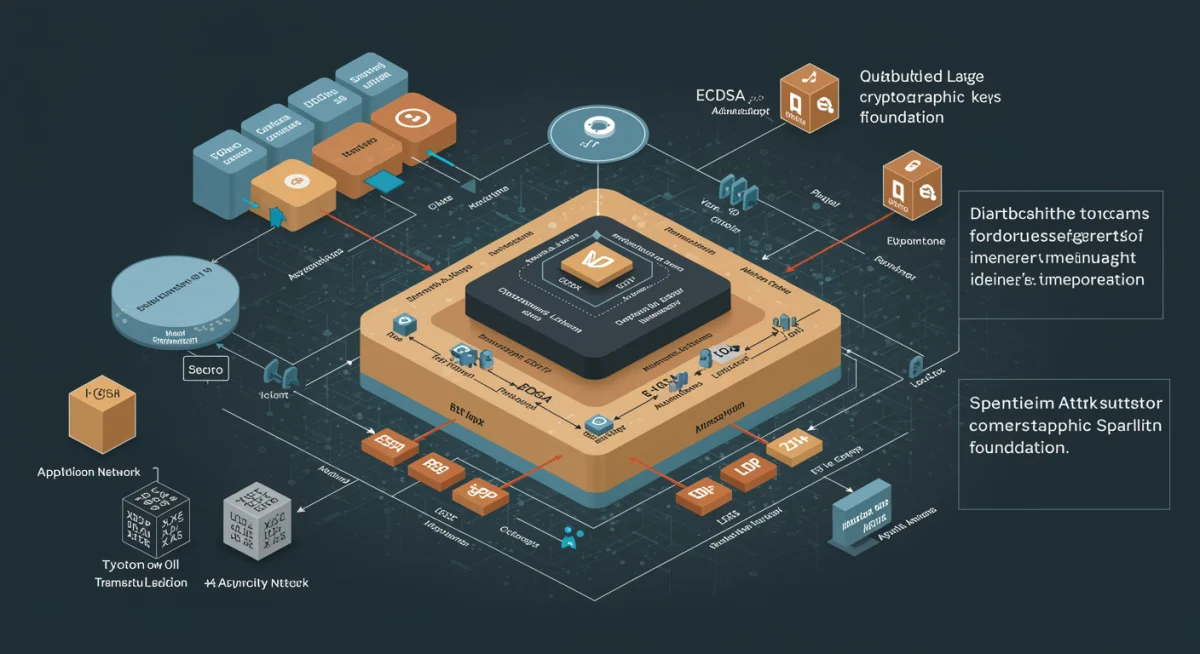
The move towards quantum-resistant blockchain is not a single event but a continuous process of adaptation and innovation. Early adoption of these strategic approaches will significantly enhance the security posture of US blockchain networks, ensuring their resilience against future quantum threats.
The Role of Government and Industry Collaboration
Protecting US blockchain networks from quantum computing attacks is a monumental task that cannot be undertaken by any single entity. It necessitates robust collaboration between government agencies, private sector innovators, academic institutions, and international partners. This collective effort is essential for sharing knowledge, pooling resources, and coordinating a unified response to a global threat.
Government initiatives, such as those from NIST and the National Security Agency (NSA), are crucial for setting standards, funding research, and providing guidance. These bodies play a vital role in identifying, evaluating, and standardizing post-quantum cryptographic algorithms, thereby providing a trusted foundation for industry adoption.
Key Areas for Collaboration
- Standardization and Policy: Government bodies must continue to lead in the standardization of PQC algorithms and establish clear policy guidelines for their adoption across critical infrastructure. This provides a clear roadmap for businesses and developers.
- Funding and Research: Public and private investment in quantum computing and PQC research is paramount. This includes funding for universities, startups, and established tech companies to accelerate the development of quantum-safe solutions.
- Information Sharing: Establishing secure channels for sharing threat intelligence, best practices, and research findings between government, industry, and academia is critical for a coordinated defense.
- Education and Workforce Development: A skilled workforce capable of understanding, developing, and deploying quantum-resistant technologies is essential. Collaboration should focus on training programs and educational initiatives to bridge the talent gap.
Industry players, from large technology companies to blockchain startups, must actively engage in pilot programs, contribute to open-source PQC projects, and begin planning for the migration of their systems. Their practical experience in implementing and scaling blockchain solutions is invaluable.
Ultimately, a synchronized approach will enable the US to not only defend its blockchain networks but also to emerge as a leader in the development and deployment of quantum-resistant technologies globally. This collaborative spirit will be the bedrock of our digital security in the quantum era.
Implementation Challenges and Mitigation Strategies
While the path to quantum-resistant blockchain is clear in theory, its practical implementation presents a myriad of challenges. The complexity of integrating new cryptographic primitives into existing, often decentralized, systems requires careful planning, significant resources, and overcoming technical hurdles.
One of the foremost challenges is the potential for backward compatibility issues. Many blockchain networks are designed with immutability in mind, making protocol upgrades difficult and contentious. Furthermore, the performance characteristics of PQC algorithms, which can sometimes be larger or slower than their classical counterparts, need to be carefully optimized to maintain blockchain efficiency.
Addressing Implementation Hurdles
- Cryptographic Agility: Designing blockchain systems with cryptographic agility allows for easier swapping of algorithms as new PQC standards emerge or as existing ones are deprecated. This modular approach minimizes the impact of future cryptographic changes.
- Gradual Migration: Instead of a sudden overhaul, a phased migration strategy can ease the transition. This might involve securing new transactions with PQC first, then gradually migrating older data or upgrading existing wallets and nodes.
- Interoperability: Ensuring that quantum-resistant blockchains can still interact with classical systems during the transition period is crucial. Standards for interoperability will help maintain a connected digital ecosystem.
- Resource Allocation: Implementing PQC will require significant computational resources, especially during the transition phase. Optimizing these processes and investing in necessary hardware upgrades will be important.
Another significant challenge is the human element. Educating developers, administrators, and users about the quantum threat and the new PQC solutions is vital. Without widespread understanding and adoption, even the most robust technical solutions can fail.

Mitigating these challenges requires a proactive and adaptive mindset. By anticipating potential roadblocks and developing flexible, scalable solutions, the US can successfully navigate the transition to quantum-resistant blockchain networks, securing its digital future against emerging threats.
The Future Landscape: Beyond the Next 3 Years
Looking beyond the immediate three-year horizon, the quantum threat will continue to evolve, necessitating an ongoing commitment to research, development, and adaptive security strategies. The emergence of quantum computing is not a one-time event but rather the dawn of a new technological era that will perpetually challenge our cybersecurity paradigms.
The landscape of quantum computing itself is dynamic. While the focus today is on Shor’s and Grover’s algorithms, future quantum advancements may reveal new attack vectors or entirely new cryptographic vulnerabilities. Therefore, a static defense will not suffice; continuous innovation and vigilance will be paramount.
Long-Term Vision for Quantum Security
- Continuous Cryptographic Research: Investing in fundamental research to discover new quantum-resistant cryptographic primitives and to understand the limitations of existing ones.
- Quantum-Safe Hardware: Developing and deploying hardware specifically designed to resist quantum attacks, potentially incorporating quantum-safe random number generators or secure enclaves.
- Decentralized Governance for Upgrades: Enhancing the governance models of decentralized blockchain networks to facilitate smoother and faster adoption of future security upgrades.
- International Cooperation: Collaborating with international partners to establish global standards for quantum-resistant cryptography and to share threat intelligence, recognizing that quantum threats are borderless.
The long-term vision for protecting US blockchain networks involves not just reacting to threats but proactively shaping the future of secure digital infrastructure. This means fostering an ecosystem where quantum security is a foundational design principle rather than an afterthought.
Ultimately, the journey to a quantum-safe blockchain future is a marathon, not a sprint. By laying strong foundations in the next three years, the US can position itself at the forefront of this technological evolution, ensuring the enduring security and integrity of its digital assets and critical infrastructure for decades to come.
| Key Point | Brief Description |
|---|---|
| Imminent Quantum Threat | Quantum computers can break current cryptographic standards (RSA, ECC) used in blockchain, posing a significant risk. |
| Vulnerable US Blockchain | US blockchain networks across sectors are exposed due to reliance on pre-quantum cryptographic algorithms. |
| Post-Quantum Cryptography (PQC) | Adopting PQC algorithms, standardized by NIST, is the primary strategy to secure blockchains against quantum attacks. |
| Collaboration is Key | Government, industry, and academia must collaborate to research, standardize, and implement quantum-resistant solutions effectively. |
Frequently Asked Questions About Quantum Blockchain Security
A quantum computing attack on blockchain involves using the immense computational power of a quantum computer to break the cryptographic algorithms that secure blockchain transactions. Specifically, Shor’s algorithm can compromise public-key cryptography like RSA and ECC, enabling attackers to forge digital signatures and potentially steal assets or alter transaction history.
Experts predict that fault-tolerant quantum computers capable of breaking current cryptographic standards could emerge within the next 5 to 10 years, making the next 3 years a critical period for proactive preparation. While widespread quantum attacks aren’t imminent today, the time required to develop and deploy new security measures necessitates immediate action.
Post-quantum cryptography (PQC) refers to new cryptographic algorithms designed to be secure against both classical and quantum computers. These algorithms aim to replace current vulnerable ones, providing a new foundation for digital security, including blockchain. NIST is currently standardizing several PQC algorithms to ensure their robustness and interoperability.
In the US, government agencies like NIST are actively involved in standardizing PQC algorithms. There’s also significant investment in research and development, fostering collaboration between academia and industry. The goal is to develop, test, and integrate quantum-resistant solutions into critical infrastructure and blockchain platforms, ensuring a secure transition.
Many existing blockchains can be upgraded through protocol changes or hard forks to incorporate post-quantum cryptographic algorithms. This approach, often using ‘cryptographic agility’ or hybrid solutions, allows for a gradual transition. While entirely new quantum-safe blockchains may emerge, upgrading existing networks is a viable and often preferred path to maintain continuity and value.
Conclusion
The imperative to protect US blockchain networks from quantum computing attacks in the next 3 years is a defining challenge of our digital era. The advance of quantum technology, while promising, brings with it the potential to dismantle the cryptographic foundations upon which our secure digital economy is built. Addressing this threat requires a proactive, coordinated, and multi-faceted approach, encompassing rigorous research into post-quantum cryptography, strategic government and industry collaboration, and careful planning for the implementation of new security standards. By embracing cryptographic agility, fostering innovation, and prioritizing education, the United States can not only mitigate the risks posed by quantum computing but also solidify its position as a leader in secure, resilient digital infrastructure. The time for preparation is now, ensuring that the transformative potential of blockchain technology remains secure for generations to come.